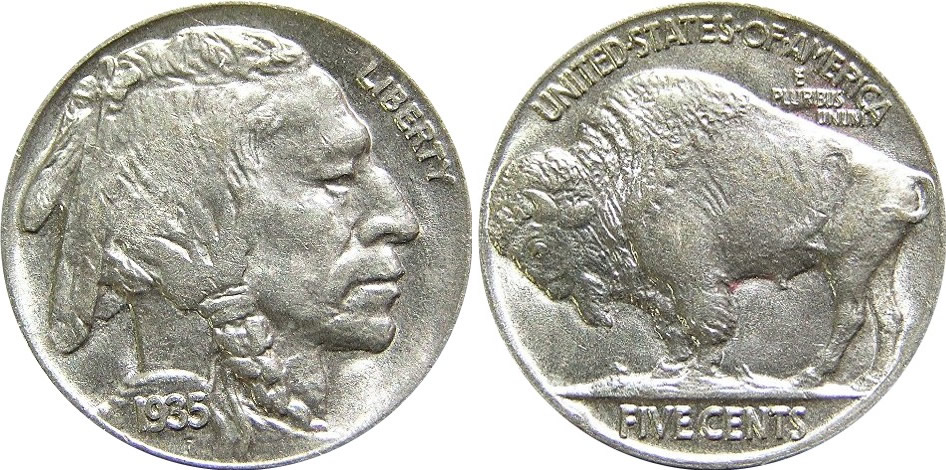
Quick Answer: Most common-date buffalo nickels in readable condition are worth $1–$5. Key dates like the 1913-S Type 2 ($150–$2,500+), 1918/7-D overdate ($1,000–$100,000+), and 1926-S ($50–$5,000+) command serious premiums. The famous 1937-D 3-Legged Buffalo variety brings $500–$35,000+ depending on grade. Dateless buffalo nickels are worth $0.20–$0.50.
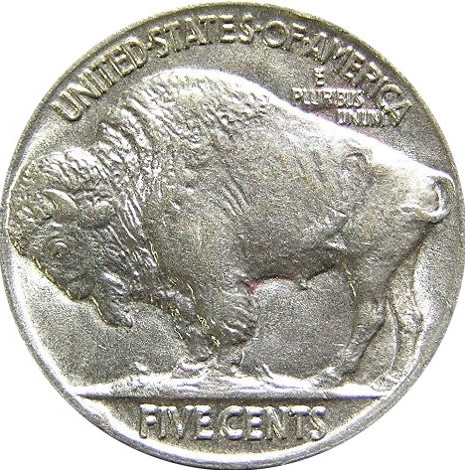
The Buffalo nickel — officially the Indian Head five-cent piece — is one of the most iconic coins in American numismatics. Designed by sculptor James Earle Fraser and minted from 1913 to 1938, it features a composite portrait of a Native American on the obverse and an American bison (often called a buffalo) on the reverse. The coin replaced the Liberty Head "V" nickel and remains one of the most visually striking designs ever produced by the U.S. Mint. With 26 years of production across three mint facilities, the series includes dozens of scarce dates, dramatic errors, and valuable varieties.
Buffalo Nickel Design and Specifications
James Earle Fraser drew inspiration from three Native American models — Iron Tail (Lakota Sioux), Two Moons (Cheyenne), and Chief John Big Tree (Seneca) — though Fraser gave somewhat conflicting accounts over the years. The bison on the reverse was reportedly modeled after "Black Diamond," a resident of the New York Central Park Zoo.
| Specification | Details |
|---|---|
| Composition | 75% copper, 25% nickel |
| Weight | 5.00 grams |
| Diameter | 21.2 mm |
| Edge | Plain |
| Designer | James Earle Fraser |
| Minting Years | 1913–1938 |
| Mints | Philadelphia (no mint mark), Denver (D), San Francisco (S) |
Type 1 vs. Type 2 (1913 Only)
In the first year of production, two distinct reverse designs were used:
- Type 1 (Mound): The buffalo stands on a raised mound, with "FIVE CENTS" on the mound. Produced early in 1913.
- Type 2 (Flat Ground): The mound was flattened and "FIVE CENTS" was placed in a recessed area below the buffalo. This change was made to reduce die wear and improve the coin's durability.
Both types were struck at all three mints in 1913, creating six distinct varieties for that year alone.
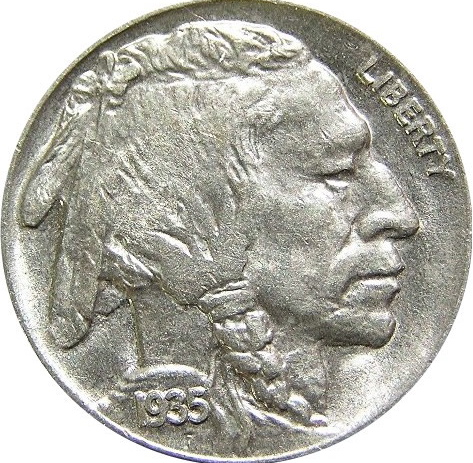
Example coin: 1935 Buffalo nickel. Photography sourced from Wikimedia Commons (original photo by Bobby131313; obverse and reverse are cropped derivatives of that file).
Buffalo Nickel Value Chart: Common Dates
The majority of buffalo nickels from the mid-1920s through the 1930s are considered common dates. However, even common buffalo nickels in nice condition carry a premium over face value due to collector demand.
| Grade | Value Range |
|---|---|
| Dateless (worn smooth) | $0.20–$0.50 |
| Good (G-4), date readable | $1–$3 |
| Very Good (VG-8) | $3–$6 |
| Fine (F-12) | $5–$10 |
| Very Fine (VF-20) | $8–$15 |
| Extremely Fine (EF-40) | $15–$30 |
| About Uncirculated (AU-50) | $30–$60 |
| Uncirculated (MS-60) | $50–$90 |
| Choice Uncirculated (MS-63) | $75–$150 |
| Gem Uncirculated (MS-65) | $200–$400 |
| Superb Gem (MS-66+) | $350–$1,000+ |
These values apply to dates like 1928, 1929, 1930-S, 1934, 1935, 1936, and 1937 Philadelphia issues. Well-struck coins with full horn detail on the buffalo command premiums at all grade levels.
Key Date Buffalo Nickel Values
Key dates drive the excitement — and the investment potential — of buffalo nickel collecting. These coins had low mintages, were poorly struck, or suffered high attrition rates, making surviving examples in nice condition genuinely scarce.
1913-S Type 2 Value
The 1913-S Type 2 is a first-year key date with a mintage of only 1,209,000. Many were weakly struck, and few survive in high grades. This is one of the most sought-after buffalo nickels.
| Grade | Value Range |
|---|---|
| Good (G-4) | $150–$225 |
| Very Good (VG-8) | $200–$325 |
| Fine (F-12) | $325–$500 |
| Very Fine (VF-20) | $450–$700 |
| Extremely Fine (EF-40) | $550–$900 |
| About Uncirculated (AU-50) | $700–$1,200 |
| Uncirculated (MS-60) | $900–$1,500 |
| Choice Uncirculated (MS-63) | $1,500–$2,500 |
| Gem Uncirculated (MS-65) | $3,000–$6,000+ |
In 2024, a 1913-S Type 2 graded MS-66 sold for over $30,000 at Heritage Auctions. The combination of first-year status, low mintage, and Type 2 scarcity makes this a cornerstone of the series.
1918/7-D Overdate Value
The 1918/7-D is the most famous buffalo nickel variety. A 1918-D die was punched over a 1917-D die, leaving clear traces of the "7" beneath the "8" in the date. This dramatic overdate is visible without magnification on higher-grade examples.
| Grade | Value Range |
|---|---|
| Good (G-4) | $1,000–$1,500 |
| Very Good (VG-8) | $1,800–$3,000 |
| Fine (F-12) | $3,500–$6,000 |
| Very Fine (VF-20) | $7,000–$12,000 |
| Extremely Fine (EF-40) | $15,000–$30,000 |
| About Uncirculated (AU-50) | $35,000–$60,000 |
| Uncirculated (MS-60) | $50,000–$80,000 |
| Gem Uncirculated (MS-65) | $200,000–$350,000+ |
Authentication is critical for this variety. PCGS and NGC attribution ensures you have a genuine overdate rather than a damaged or altered coin.
1926-S Value
The 1926-S has the lowest mintage of any regular-issue buffalo nickel at just 970,000 coins. Virtually all known examples are weakly struck, which means even high-grade coins often show incomplete horn detail and mushy features.
| Grade | Value Range |
|---|---|
| Good (G-4) | $10–$20 |
| Very Good (VG-8) | $15–$30 |
| Fine (F-12) | $50–$90 |
| Very Fine (VF-20) | $100–$200 |
| Extremely Fine (EF-40) | $350–$700 |
| About Uncirculated (AU-50) | $750–$1,500 |
| Uncirculated (MS-60) | $1,500–$3,000 |
| Choice Uncirculated (MS-63) | $3,000–$5,500 |
| Gem Uncirculated (MS-65) | $10,000–$25,000+ |
A well-struck 1926-S in gem condition is one of the great rarities of 20th-century U.S. coinage.
1916 Doubled Die Obverse Value
The 1916 DDO shows strong doubling on the date and "LIBERTY." While not as well-known as the 1955 Lincoln cent doubled die, this variety is extremely rare and valuable.
| Grade | Value Range |
|---|---|
| Good (G-4) | $3,000–$5,000 |
| Very Fine (VF-20) | $15,000–$30,000 |
| Extremely Fine (EF-40) | $40,000–$80,000 |
| Uncirculated (MS-63) | $100,000–$200,000+ |
Complete Buffalo Nickel Value by Year
1913: The First Year
All six 1913 varieties carry collector premiums, even in well-worn condition. Type 1 coins are generally more affordable because they were produced in higher quantities.
| Date & Type | Mintage | G-4 | VF-20 | MS-63 |
|---|---|---|---|---|
| 1913 Type 1 | 30,993,520 | $8–$12 | $20–$30 | $100–$150 |
| 1913-D Type 1 | 5,337,000 | $12–$18 | $30–$55 | $175–$300 |
| 1913-S Type 1 | 2,105,000 | $20–$30 | $50–$85 | $275–$450 |
| 1913 Type 2 | 29,858,700 | $8–$14 | $22–$35 | $110–$175 |
| 1913-D Type 2 | 4,156,000 | $30–$50 | $75–$130 | $275–$500 |
| 1913-S Type 2 | 1,209,000 | $150–$225 | $450–$700 | $1,500–$2,500 |
1914–1919: Early Production
These years include several semi-key dates, particularly from the Denver and San Francisco mints. Weak strikes are common throughout this period.
| Date | Mint | Mintage | G-4 | VF-20 | MS-63 |
|---|---|---|---|---|---|
| 1914 | P | 20,665,738 | $8–$12 | $25–$40 | $125–$200 |
| 1914-D | D | 3,912,000 | $30–$55 | $100–$180 | $500–$900 |
| 1914-S | S | 3,470,000 | $12–$20 | $50–$85 | $350–$650 |
| 1915 | P | 20,987,270 | $5–$10 | $25–$40 | $125–$200 |
| 1915-D | D | 7,569,500 | $8–$14 | $35–$60 | $250–$450 |
| 1915-S | S | 1,505,000 | $20–$35 | $75–$150 | $450–$800 |
| 1916 | P | 63,498,066 | $3–$5 | $15–$25 | $80–$130 |
| 1916-D | D | 13,333,000 | $5–$10 | $25–$45 | $175–$300 |
| 1916-S | S | 11,860,000 | $5–$10 | $25–$45 | $175–$300 |
| 1917 | P | 51,424,029 | $3–$5 | $15–$25 | $80–$130 |
| 1917-D | D | 9,910,800 | $6–$12 | $30–$55 | $275–$500 |
| 1917-S | S | 4,193,000 | $6–$12 | $30–$60 | $350–$600 |
| 1918 | P | 32,086,314 | $3–$6 | $18–$30 | $125–$200 |
| 1918-D | D | 8,362,000 | $6–$12 | $40–$75 | $450–$800 |
| 1918-S | S | 4,882,000 | $5–$10 | $30–$60 | $400–$700 |
| 1919 | P | 60,868,000 | $2–$4 | $12–$20 | $80–$130 |
| 1919-D | D | 8,006,000 | $8–$15 | $40–$80 | $500–$900 |
| 1919-S | S | 7,521,000 | $5–$10 | $30–$60 | $450–$800 |
1920–1929: The Scarce Decade
The 1920s produced many of the series' key and semi-key dates. Branch mint issues from this decade are consistently scarce, especially in grades above Fine.
| Date | Mint | Mintage | G-4 | VF-20 | MS-63 |
|---|---|---|---|---|---|
| 1920 | P | 63,093,000 | $2–$4 | $12–$20 | $80–$130 |
| 1920-D | D | 9,418,000 | $5–$10 | $30–$60 | $350–$650 |
| 1920-S | S | 9,689,000 | $3–$7 | $25–$50 | $400–$750 |
| 1921 | P | 10,663,000 | $3–$6 | $18–$35 | $125–$225 |
| 1921-S | S | 1,557,000 | $20–$40 | $100–$200 | $800–$1,500 |
| 1923 | P | 35,715,000 | $2–$4 | $10–$18 | $80–$120 |
| 1923-S | S | 6,142,000 | $4–$8 | $25–$50 | $400–$750 |
| 1924 | P | 21,620,000 | $2–$4 | $12–$22 | $80–$130 |
| 1924-D | D | 5,258,000 | $5–$10 | $30–$60 | $350–$600 |
| 1924-S | S | 1,437,000 | $10–$20 | $60–$120 | $700–$1,500 |
| 1925 | P | 35,565,100 | $2–$4 | $10–$18 | $75–$120 |
| 1925-D | D | 4,450,000 | $6–$12 | $30–$60 | $250–$450 |
| 1925-S | S | 6,256,000 | $4–$8 | $20–$40 | $350–$600 |
| 1926 | P | 44,693,000 | $2–$3 | $8–$14 | $65–$100 |
| 1926-D | D | 5,638,000 | $5–$10 | $25–$50 | $250–$450 |
| 1926-S | S | 970,000 | $10–$20 | $100–$200 | $3,000–$5,500 |
| 1927 | P | 37,981,000 | $2–$3 | $8–$14 | $65–$100 |
| 1927-D | D | 5,730,000 | $3–$6 | $15–$30 | $175–$300 |
| 1927-S | S | 3,430,000 | $3–$6 | $15–$35 | $400–$750 |
| 1928 | P | 23,411,000 | $2–$3 | $8–$14 | $65–$100 |
| 1928-D | D | 6,436,000 | $3–$5 | $12–$22 | $125–$200 |
| 1928-S | S | 6,936,000 | $2–$4 | $10–$18 | $150–$275 |
| 1929 | P | 36,446,000 | $2–$3 | $8–$14 | $65–$100 |
| 1929-D | D | 8,370,000 | $3–$5 | $10–$18 | $100–$175 |
| 1929-S | S | 7,754,000 | $2–$4 | $10–$18 | $100–$175 |
Note: No buffalo nickels were struck in 1922 or at the Denver Mint in 1923.
1930–1938: The Final Years
Production resumed after a brief hiatus in 1930, and the series ran through 1938 before being replaced by the Jefferson nickel. Late-date buffalo nickels are generally the most affordable in the series.
| Date | Mint | Mintage | G-4 | VF-20 | MS-63 |
|---|---|---|---|---|---|
| 1930 | P | 22,849,000 | $2–$3 | $8–$14 | $65–$100 |
| 1930-S | S | 5,435,000 | $2–$4 | $8–$14 | $75–$120 |
| 1931-S | S | 1,200,000 | $6–$12 | $20–$40 | $150–$275 |
| 1934 | P | 20,213,003 | $2–$3 | $8–$14 | $65–$100 |
| 1934-D | D | 7,480,000 | $3–$5 | $10–$18 | $100–$175 |
| 1935 | P | 58,264,000 | $1–$2 | $5–$10 | $50–$80 |
| 1935-D | D | 12,092,000 | $2–$3 | $8–$14 | $75–$130 |
| 1935-S | S | 10,300,000 | $2–$3 | $8–$14 | $80–$130 |
| 1936 | P | 119,001,420 | $1–$2 | $5–$8 | $40–$65 |
| 1936-D | D | 24,814,000 | $2–$3 | $6–$10 | $55–$90 |
| 1936-S | S | 14,930,000 | $2–$3 | $6–$10 | $55–$90 |
| 1937 | P | 79,485,769 | $1–$2 | $5–$8 | $40–$65 |
| 1937-D | D | 17,826,000 | $2–$3 | $5–$10 | $50–$80 |
| 1937-S | S | 5,635,000 | $2–$3 | $6–$10 | $60–$95 |
| 1938-D | D | 7,020,000 | $3–$5 | $10–$16 | $75–$120 |
Note: No buffalo nickels were struck in 1932, 1933, or at the Philadelphia or San Francisco mints in 1931. The 1938-D is the only buffalo nickel of that year — production transitioned to the Jefferson design.
The 1937-D 3-Legged Buffalo: The Most Famous Nickel Error
The 1937-D 3-Legged Buffalo is arguably the most famous error in all of American numismatics. An employee at the Denver Mint over-polished a reverse die to remove clash marks, inadvertently removing the buffalo's front right leg. Thousands of coins were struck from this defective die before it was pulled from service.
| Grade | Value Range |
|---|---|
| Good (G-4) | $500–$700 |
| Very Good (VG-8) | $650–$900 |
| Fine (F-12) | $800–$1,200 |
| Very Fine (VF-20) | $1,200–$2,000 |
| Extremely Fine (EF-40) | $2,500–$4,500 |
| About Uncirculated (AU-50) | $5,000–$9,000 |
| Uncirculated (MS-60) | $9,000–$15,000 |
| Choice Uncirculated (MS-63) | $15,000–$25,000 |
| Gem Uncirculated (MS-65) | $30,000–$50,000+ |
How to Authenticate a 3-Legged Buffalo
Counterfeits and altered coins are common. Look for these diagnostic markers on genuine examples:
- Absent front right leg: The leg is completely missing, with a smooth area where it should be
- Streak beneath belly: A faint raised line or "ghost" remnant where the leg was polished away
- Reduced detail on the rear legs: The over-polishing also slightly reduced detail on the remaining legs
- Die polish lines: Parallel lines visible on the reverse, particularly around the hip area
If you think you have a 3-Legged Buffalo, professional authentication by PCGS or NGC is essential before buying or selling.
Other Valuable Buffalo Nickel Errors and Varieties
| Error/Variety | Dates | Value Range |
|---|---|---|
| 1918/7-D Overdate | 1918-D | $1,000–$350,000+ |
| 1916 Doubled Die Obverse | 1916 | $3,000–$280,000+ |
| 1935 Doubled Die Reverse | 1935 | $25–$1,500+ |
| 1917-D 2-Feather | 1917-D | $20–$2,000+ |
| Off-Center Strikes (10–50%) | Various | $20–$500+ |
| Broadstrikes (no collar) | Various | $25–$200 |
| Clipped Planchets | Various | $10–$100 |
| Die Cuds (major) | Various | $25–$300+ |
| Rotated Dies | Various | $15–$150 |
| Struck-Through Errors | Various | $15–$200+ |
How to Grade Buffalo Nickels
Grading buffalo nickels accurately is essential for determining value — a single grade point can mean hundreds or even thousands of dollars on key dates. The Sheldon scale runs from 1 to 70.
Key Wear Points
- Buffalo's horn: The highest point on the reverse. This is the first area to show friction and is the primary grading focal point
- Buffalo's hip and shoulder: Show wear early in circulation; look for flatness
- Indian's cheekbone: The highest point on the obverse portrait
- Hair braid above ear: Fine detail that quickly flattens with wear
- "LIBERTY" at right base of portrait: Fully visible on VG and above; partially obscured in lower grades
- Date: The date on buffalo nickels is on a raised area and wears quickly — dateless coins are the most common buffalo nickel condition
Quick Grading Reference
| Grade | What to Look For |
|---|---|
| About Good (AG-3) | Outline visible, date partially readable, most detail worn smooth |
| Good (G-4) | Date fully readable, rim intact, Indian's outline clear, horn worn flat |
| Very Good (VG-8) | Horn visible but worn, partial hair detail, "LIBERTY" partially readable |
| Fine (F-12) | Two-thirds of horn detail visible, hair braid shows, "LIBERTY" full |
| Very Fine (VF-20) | Horn nearly complete, most hair detail visible, slight wear on shoulder |
| Extremely Fine (EF-40) | Full horn with slight flatness at tip, sharp hair detail, light wear on hip |
| About Uncirculated (AU-50) | Trace wear on cheekbone and horn tip only, substantial luster remaining |
| Uncirculated (MS-60+) | No wear; graded by luster, strike quality, and contact marks |
Strike Quality Matters
Buffalo nickels are notorious for weak strikes, especially from the Denver and San Francisco mints during the 1920s. A well-struck coin with full horn detail, sharp hair, and crisp lettering commands a significant premium over a weakly struck example of the same date and grade. When buying, look for full separation between the buffalo's front and rear legs, complete horn detail, and sharp feather tips on the Indian's headdress.
The Dateless Buffalo Nickel Problem
One of the biggest challenges with buffalo nickels is worn dates. Fraser's design placed the date on a raised area that wore down quickly in circulation. Millions of buffalo nickels have dates too worn to read, dramatically reducing their value to $0.20–$0.50.
Can You Restore a Date?
A common trick involves applying ferric chloride (sometimes called "nic-a-date") to the coin's surface. This acid etches the metal differently where the date was stamped, sometimes revealing the date. However, this process damages the coin's surface permanently and coins treated this way are worth less than those with naturally readable dates. Acid-treated coins are not eligible for PCGS or NGC grading.
Tips for Preventing Date Loss
If you find buffalo nickels in circulation or in a collection:
- Store them in individual holders rather than loose in bags or jars
- Handle by edges only — fingerprints accelerate corrosion
- Keep in a stable, low-humidity environment
- Never clean or polish them
Buffalo Nickel Collecting Strategies
Strategy 1: One Per Year (Budget-Friendly)
Collect one buffalo nickel for each year minted (1913–1938, excluding years with no production). This approach requires roughly 25 coins and can be completed in readable condition for $100–$300, skipping the expensive 1913-S Type 2 and 1918/7-D.
Strategy 2: Complete by Date and Mint Mark
A full date-and-mint-mark set comprises approximately 64 coins. In circulated grades (Good to Fine), expect to spend $2,000–$8,000. The 1913-S Type 2, 1921-S, and 1926-S will account for most of the cost.
Strategy 3: Key Dates Only
Focus on the coins that carry real investment potential: the 1913-S Type 2, 1918/7-D, 1921-S, 1924-S, 1926-S, and 1937-D 3-Legged. Buy the best grade you can afford and always insist on PCGS or NGC certification for coins valued over $100.
Estimated Budget by Completion Level
| Collection Goal | Estimated Cost |
|---|---|
| One per year, any mint, G-4 | $100–$300 |
| Complete by date/mint, G-4 | $2,000–$5,000 |
| Complete by date/mint, VF-20 | $5,000–$15,000 |
| Complete by date/mint, MS-63 | $30,000–$80,000+ |
Where to Buy Buffalo Nickels
Coin Dealers and Shows
Most coin shops stock common-date buffalo nickels. Coin shows are ideal for comparing offerings from multiple dealers and often provide the best prices for mid-range dates.
Online Auctions and Marketplaces
- Heritage Auctions: The premier auction house for certified buffalo nickels, especially key dates
- eBay: Wide selection at all price points — always buy PCGS/NGC certified coins for purchases over $50
- Great Collections: Online auction site specializing in certified U.S. coins
Estate Sales and Inherited Collections
Buffalo nickels are among the most commonly found coins in inherited collections. If you've received a jar of old nickels, sorting by date and mint mark is the first step. CoinID can instantly identify each coin from a photo, saving you hours of manual sorting and giving you current market values.
Buffalo Nickel Investment Outlook
Buffalo nickels have proven to be solid long-term collectibles. Key dates in certified high grades have appreciated consistently over the past several decades. The series benefits from strong collector demand, a visually iconic design, and genuine scarcity in certain dates and grades.
Factors that support long-term value:
- Finite supply: No more will ever be made, and high-grade examples are consumed by collectors
- Iconic design: Widely recognized as one of America's most beautiful coin designs
- Active collector base: Buffalo nickels have one of the most dedicated collector followings
- Cross-collector appeal: Attracts both type collectors and series specialists
- Condition scarcity: Many dates are common in low grades but genuinely rare in Mint State
Frequently Asked Questions
How much is a buffalo nickel worth?
Most buffalo nickels with readable dates are worth $1–$5 in circulated condition. Key dates like the 1913-S Type 2, 1918/7-D, 1921-S, and 1926-S are worth significantly more. Dateless buffalo nickels are worth about $0.20–$0.50.
What is the most valuable buffalo nickel?
The most valuable regular-issue buffalo nickel is the 1926-S in gem condition, which can sell for $25,000+. Among varieties, the 1918/7-D overdate holds records exceeding $350,000 in Mint State. The 1916 Doubled Die Obverse has reached $280,000+ at auction.
How can I tell if my buffalo nickel is valuable?
Check the date (if readable) and the mint mark, located on the reverse below "FIVE CENTS." Key dates to look for include 1913-S Type 2, 1914-D, 1915-S, 1921-S, 1924-S, 1926-S, and any 1937-D that appears to show only three legs on the buffalo. Use CoinID to photograph your coin and get an instant identification with current market values.
Where is the mint mark on a buffalo nickel?
On Type 1 (1913 only), the mint mark is on the reverse, below "FIVE CENTS" on the raised mound. On Type 2 (1913–1938), it's on the reverse below "FIVE CENTS" in the recessed area. "D" indicates Denver, "S" indicates San Francisco, and no mint mark means Philadelphia.
Are dateless buffalo nickels worth anything?
Dateless buffalo nickels are worth $0.20–$0.50 each. While some collectors use acid (ferric chloride) to reveal dates, this damages the coin and doesn't significantly increase value. Dateless coins are still popular for jewelry and novelty purposes.
What is a 3-Legged buffalo nickel worth?
The 1937-D 3-Legged Buffalo ranges from $500 in Good condition to $50,000+ in gem Mint State. Be cautious of counterfeits — always look for the diagnostic die polish lines and the "ghost" remnant beneath the belly. Professional grading is strongly recommended.
Should I get my buffalo nickel graded?
Professional grading ($30–$50+ per coin) is recommended for any buffalo nickel you believe is worth $100 or more. For key dates, error coins, and high-grade examples, PCGS or NGC certification provides authentication, a standardized grade, and a tamper-evident holder that protects the coin and facilitates resale.
How do I tell a Type 1 from a Type 2 buffalo nickel?
Look at the reverse. On Type 1, the buffalo stands on a raised mound with "FIVE CENTS" inscribed on the mound itself. On Type 2, the mound is flattened into a straight line, and "FIVE CENTS" appears in a recessed area below the line. Only 1913 coins exist in both types.
Conclusion
The Buffalo nickel series (1913–1938) offers one of the most rewarding collecting experiences in American numismatics. From affordable common dates perfect for beginners to five- and six-figure rarities for advanced collectors, there's something at every budget level. Understanding which dates, mint marks, and varieties carry premiums — and knowing how to assess strike quality and condition — is the key to building a meaningful collection and recognizing value when you see it. Whether you've found a handful of buffalo nickels in an old cigar box or you're strategically pursuing key dates, having the right identification tools makes all the difference. Use CoinID to instantly identify your buffalo nickels, assess their condition, and get current market values — just snap a photo and let the app do the work.