Quick Answer: All three 20th-century silver half dollar series — Walking Liberty (1916–1947), Franklin (1948–1963), and Kennedy (1964–present) — contain 90% silver in their original issues and are actively collected. Walking Liberty halves are generally the most valuable, with key dates reaching six figures. Franklin halves offer the best entry point for new collectors, with most dates available for $12–$25. Kennedy halves are the most widely recognized but carry the lowest premiums in circulated grades. Your best choice depends on your budget, collecting goals, and whether you prioritize artistic beauty, affordability, or modern popularity.
The US half dollar has been minted continuously since 1794, but the three series that dominate the modern collecting market are the Walking Liberty, Franklin, and Kennedy types. Together they span from 1916 to the present — over a century of American coinage. Each series has its own distinct character, value profile, and collecting appeal. This guide breaks down exactly how they compare so you can make informed decisions whether you're buying your first half dollar or building a serious collection.
Design Comparison
Walking Liberty (1916–1947)
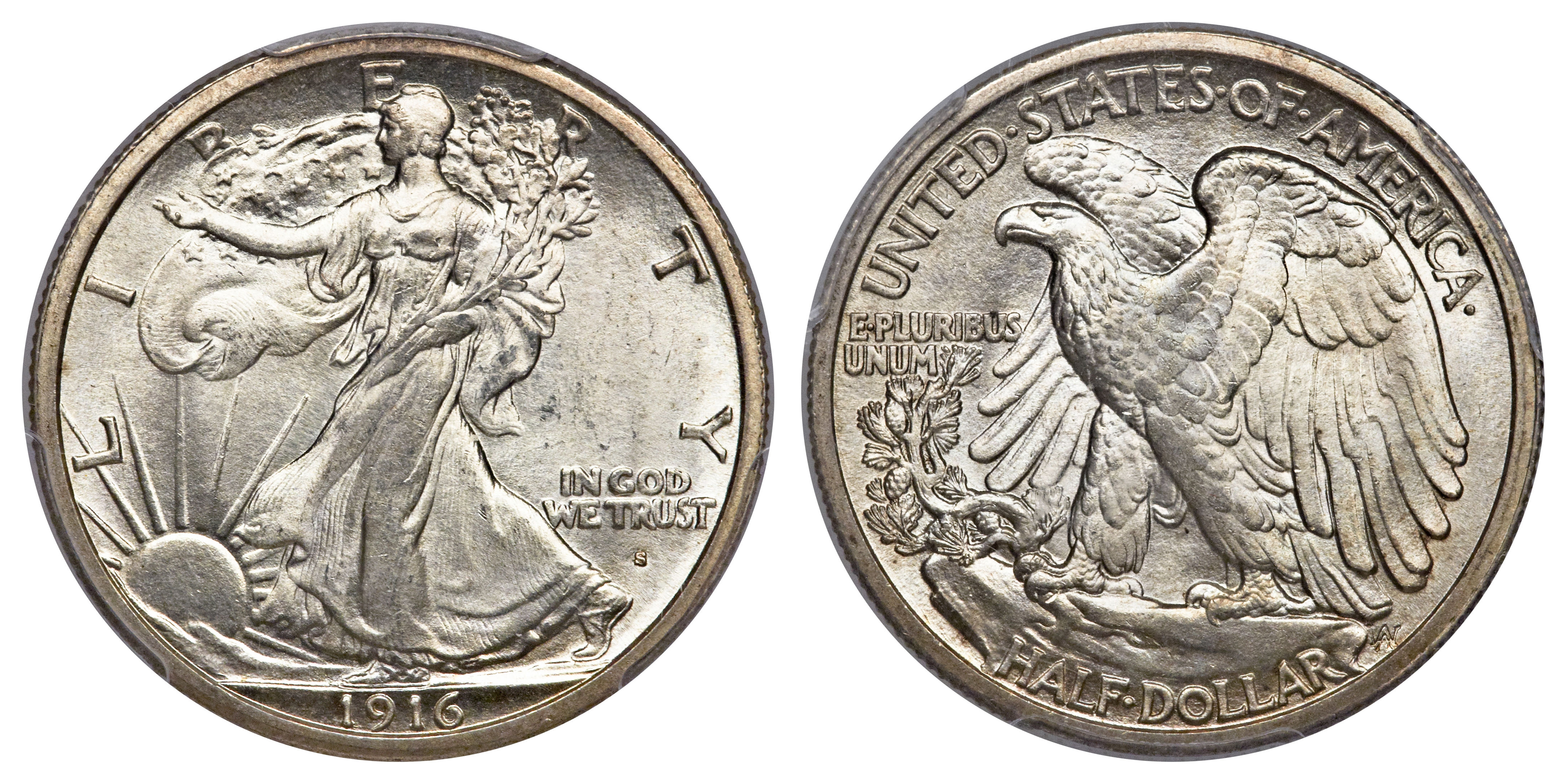
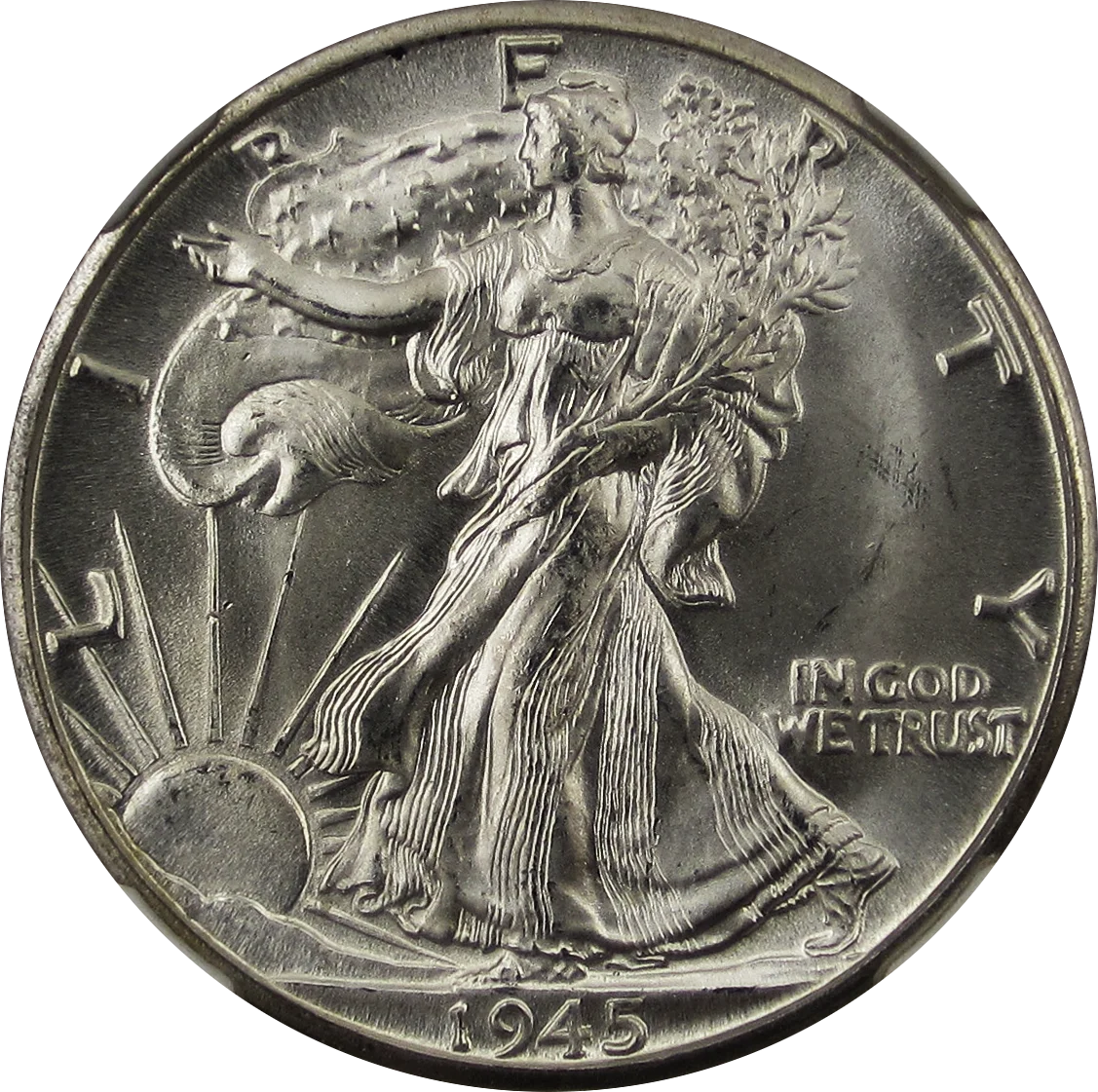
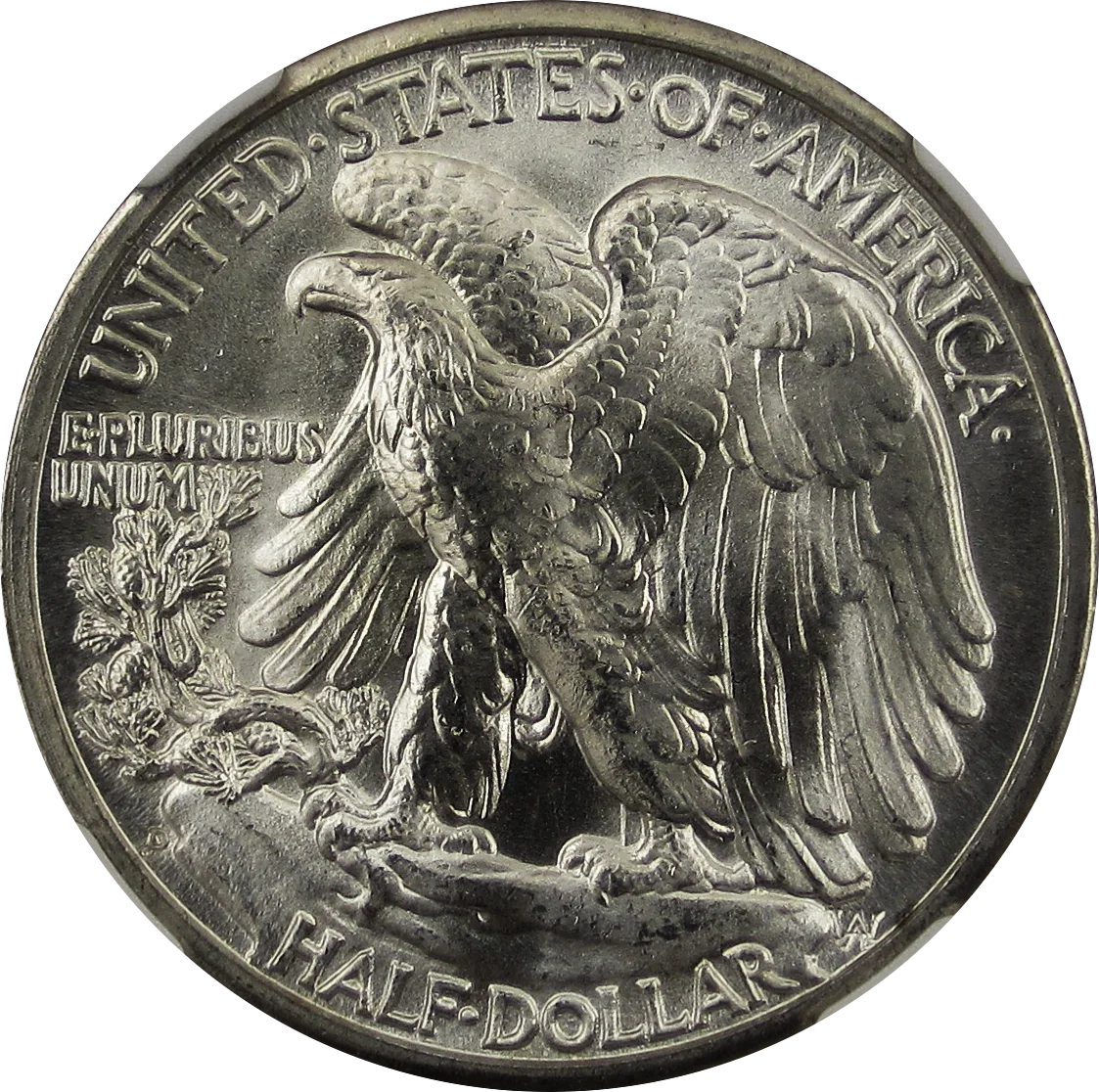
Designed by German-born sculptor Adolph Alexander Weinman, the Walking Liberty half dollar is widely considered one of the most beautiful coins in American history. The obverse shows a full-length figure of Liberty striding confidently toward the sunrise, draped in an American flag, with her right hand outstretched and her left arm cradling olive branches. The reverse features a bald eagle perched on a rocky crag with a pine sapling. Weinman won a Commission of Fine Arts competition to design both the half dollar and the dime (the Mercury dime), beating out several prominent sculptors.
The design was so acclaimed that the United States Mint revived it for the American Silver Eagle bullion program in 1986, where it remains in use today — making it one of the most recognized coin designs in the world.
Franklin (1948–1963)
Designed by Chief Engraver John R. Sinnock, the Franklin half dollar features Benjamin Franklin's portrait on the obverse, making it the first US circulating coin to depict a real person who was not a president. The reverse shows the Liberty Bell with a small eagle to the right — the eagle was added to satisfy the legal requirement that half dollars feature the national bird. Sinnock adapted the design from the profile he created for the Roosevelt dime in 1946.
The Franklin design is sometimes criticized as less artistically ambitious than the Walking Liberty it replaced, but it has grown in collector popularity over the decades, particularly for the challenge of finding well-struck "Full Bell Lines" specimens.
Kennedy (1964–present)
Designed by Gilroy Roberts (obverse) and Frank Gasparro (reverse), the Kennedy half dollar was rushed into production in early 1964 following President John F. Kennedy's assassination on November 22, 1963. The obverse features Kennedy's portrait, while the reverse shows the presidential seal. Congress authorized the design change just weeks after Kennedy's death, and the first coins were released in March 1964.
The 1964 Kennedy half dollar was so popular that the public hoarded them immediately — few ever circulated. This hoarding behavior, combined with the switch from 90% silver to 40% silver in 1965 and then to copper-nickel clad in 1971, means that the Kennedy series has a unique value structure among half dollars.
Specifications Comparison
| Specification | Walking Liberty | Franklin | Kennedy (1964) | Kennedy (Clad) |
|---|---|---|---|---|
| Years Minted | 1916–1947 | 1948–1963 | 1964 | 1971–present |
| Designer | A.A. Weinman | J.R. Sinnock | Roberts/Gasparro | Roberts/Gasparro |
| Composition | 90% Ag, 10% Cu | 90% Ag, 10% Cu | 90% Ag, 10% Cu | Cu-Ni clad |
| Weight | 12.50 g | 12.50 g | 12.50 g | 11.34 g |
| Diameter | 30.63 mm | 30.63 mm | 30.63 mm | 30.61 mm |
| Silver Content | 0.3617 oz | 0.3617 oz | 0.3617 oz | 0 oz |
| Edge | Reeded | Reeded | Reeded | Reeded |
| Mint Marks | P, D, S | P, D, S | P, D | P, D, S, W |
The Walking Liberty, Franklin, and 1964 Kennedy half dollars are identical in weight, diameter, and silver content — they're all 90% silver coins containing 0.3617 troy ounces of pure silver. The only significant physical difference is the 1971+ Kennedy's switch to copper-nickel clad, which reduced the weight to 11.34 grams and eliminated all silver content from regular-issue coins.
Value Comparison
Common Dates Side-by-Side
This table compares what you'll pay for a typical common-date example from each series at various grade levels.
| Grade | Walking Liberty | Franklin | Kennedy (1964) | Kennedy (Clad) |
|---|---|---|---|---|
| Good (G-4) | $15–$20 | $12–$16 | N/A (most are AU+) | $0.50–$1 |
| Very Fine (VF-20) | $22–$35 | $14–$20 | N/A (most are AU+) | $0.50–$1 |
| Extremely Fine (EF-40) | $28–$45 | $15–$22 | $12–$15 | $0.50–$1 |
| About Uncirculated (AU-50) | $40–$65 | $16–$25 | $13–$18 | $0.75–$2 |
| MS-63 | $80–$150 | $25–$50 | $18–$30 | $2–$5 |
| MS-65 | $150–$500 | $50–$200 | $40–$80 | $8–$20 |
Walking Liberty halves consistently command the highest premiums at every grade level, driven by stronger collector demand and greater design appeal. Franklin halves offer the best value proposition for silver content — many circulated examples sell near silver melt value with a modest collector premium. Kennedy halves (1964) rarely show up in circulated grades because they were hoarded from day one.
Key Dates Comparison
| Series | Key Date | Mintage | Good (G-4) | MS-63 |
|---|---|---|---|---|
| Walking Liberty | 1921-D | 208,000 | $175–$250 | $5,000–$12,000 |
| Walking Liberty | 1921 | 246,000 | $125–$175 | $4,500–$10,000 |
| Walking Liberty | 1916-S | 508,000 | $85–$120 | $1,800–$4,000 |
| Franklin | 1953-S (FBL) | 4,148,000 | N/A | $2,000–$10,000+ |
| Franklin | 1949-S | 3,744,000 | $12–$18 | $70–$160 |
| Franklin | 1955 "Bugs Bunny" | Variety | $15–$25 | $100–$400 |
| Kennedy | 1964 Accented Hair | Variety | N/A | $50–$500 |
| Kennedy | 1970-D | 2,150,000 | N/A | $25–$75 |
| Kennedy | 1998-S Matte | 62,000 | N/A | $150–$300 |
Walking Liberty key dates operate in an entirely different price tier than Franklin or Kennedy rarities. A 1921-D Walking Liberty in MS-65 can be worth $40,000–$150,000+, while the most expensive Franklin rarity — the 1953-S in MS-65 with Full Bell Lines — maxes out around $10,000–$20,000. Kennedy half dollar "rarities" are typically in the $50–$500 range.
Silver Content and Melt Value
All three series share the same silver specifications in their original 90% silver issues. At any given silver price, a Walking Liberty, Franklin, or 1964 Kennedy half dollar contains exactly the same amount of silver — 0.3617 troy ounces.
| Silver Price (per oz) | Melt Value per Coin | 10-Coin Roll Melt |
|---|---|---|
| $25 | $9.04 | $90.43 |
| $30 | $10.85 | $108.51 |
| $35 | $12.66 | $126.60 |
| $40 | $14.47 | $144.68 |
The difference lies in the premium over melt that each series commands:
- Walking Liberty: Common dates typically sell for 30–100% over melt value, key dates far more
- Franklin: Common dates typically sell for 10–40% over melt, closest to pure silver value
- Kennedy (1964): Common dates sell for 10–30% over melt value
- Kennedy (40% silver, 1965–1970): Contains 0.1479 oz silver, typically at or near melt
For pure silver investment with minimal collector premium, Franklin half dollars are generally the best buy. For collector potential alongside silver exposure, Walking Liberty halves offer the strongest upside.
Strike Quality and Grading
Walking Liberty: The "Full Strike" Challenge
Strike quality varies enormously across the Walking Liberty series. Liberty's outstretched hand, head, and the gown lines are the most difficult areas to fully strike, and many coins — especially San Francisco issues — show mushy detail even in technically uncirculated grades. A "Full Strike" designation from PCGS or NGC can add 20–50% to a coin's value.
Franklin: Full Bell Lines (FBL)
The Franklin half dollar's defining grading feature is the "Full Bell Lines" (FBL) designation. The bottom of the Liberty Bell on the reverse has horizontal lines that are often weakly struck or obscured by die polishing. A coin with fully defined, unbroken bell lines receives the FBL designation, which can multiply value by 2–10x depending on the date. The 1953-S is virtually impossible to find with full bell lines, making it one of the most challenging coins in all of 20th-century numismatics.
Kennedy: Deep Cameo Proofs
For Kennedy half dollars, the most significant premium driver is the proof finish. Deep Cameo (DCAM) proof Kennedy halves — with frosted devices against mirror-like fields — are the most collected subset of the series. Silver proof Kennedy halves (1992–present, 90% silver) in PR-70 DCAM command premiums of $25–$100 over regular proofs.
Collecting Strategies by Series
Walking Liberty: For the Connoisseur
Best for: Experienced collectors who value artistic beauty and numismatic challenge.
- Budget entry: A 1940s common date in VF-20 for $22–$35
- Short set (1941–1947): 20 coins in VF-20 for $400–$600
- Complete set (1916–1947): 65 date/mint combinations, $4,000–$10,000 in circulated grades
- Key strength: Highest potential for long-term appreciation; iconic design; American Silver Eagle connection ensures permanent relevance
- Key weakness: Early dates (1916–1921) are expensive even in low grades; strike quality adds complexity
Franklin: For the Value Seeker
Best for: Budget-conscious collectors and Full Bell Lines specialists.
- Budget entry: A common date in VF-20 for $14–$20
- Complete set (1948–1963): 35 date/mint combinations in VF-20 for $500–$800
- FBL set challenge: Assembling a complete FBL set is extremely difficult and can cost $15,000–$50,000+
- Key strength: Most affordable complete silver half dollar set; FBL specialization rewards expertise; undervalued relative to Walking Liberty
- Key weakness: Design is less visually appealing; limited collector demand compared to other series; shorter series run
Kennedy: For the Modern Collector
Best for: Beginners, JFK enthusiasts, and proof collectors.
- Budget entry: A 1964 silver example in AU for $13–$18
- Proof set (1964–present): Focusing on proof issues creates a beautiful display collection
- Complete clad set (1971–present): Inexpensive to assemble from circulation and mint sets
- Key strength: Most recognized half dollar; affordable entry; active modern series still in production
- Key weakness: Clad issues have minimal collector value; limited appreciation potential for common dates; market is driven more by silver price than numismatic demand
Investment Comparison
Historical Performance
Over the past several decades, each series has performed differently as an investment:
| Factor | Walking Liberty | Franklin | Kennedy |
|---|---|---|---|
| 10-Year Common Date Appreciation | Moderate-High | Moderate | Low |
| Key Date Appreciation | Strong | Moderate | Low-Moderate |
| Silver Melt Floor | Yes (0.3617 oz) | Yes (0.3617 oz) | 1964 only |
| Collector Base Growth | Growing | Stable | Declining (clad) |
| Liquidity | High | Moderate | Very High |
| Counterfeit Risk | Moderate (key dates) | Low | Very Low |
| Cross-Collector Appeal | Very High | Moderate | Moderate |
Which Series Is the Best Investment?
Walking Liberty offers the strongest investment case. The design's use on the American Silver Eagle ensures permanent visibility, key dates have genuine scarcity, and the growing emphasis on strike quality (Full Strike) creates pricing inefficiencies that knowledgeable buyers can exploit. The challenge: entry costs are higher, and building expertise takes time.
Franklin is arguably the most undervalued series. The Full Bell Lines specialization is still relatively niche, meaning opportunities exist to acquire scarce FBL coins before the market fully prices in their rarity. The 1953-S FBL, for instance, is rarer than many Walking Liberty key dates but trades at a fraction of the price.
Kennedy is the least compelling pure investment among the three silver series. The 1964 issue functions more as a silver bullion vehicle than a numismatic collectible, and clad issues from 1971 onward have negligible collector premium. However, the series' universal recognition makes it the most liquid — you can buy or sell Kennedy halves anywhere, anytime.
Which Half Dollar Series Should You Collect?
Choose Walking Liberty If You:
- Appreciate artistic beauty in coinage
- Want coins with strong long-term appreciation potential
- Enjoy the challenge of evaluating strike quality
- Have a budget of $500+ to start meaningfully
- Collect or plan to collect American Silver Eagles
Choose Franklin If You:
- Want the most affordable complete silver half dollar set
- Enjoy specializing in strike quality (Full Bell Lines)
- Appreciate value investing — buying undervalued coins before the market catches up
- Like the challenge of assembling a scarce FBL set
- Have a budget of $200+ to start
Choose Kennedy If You:
- Are new to coin collecting and want an easy entry point
- Collect modern proof coins for their visual appeal
- Want silver exposure near melt value (1964 issues)
- Have a strong personal connection to JFK's legacy
- Want maximum liquidity with any budget level
Or Collect All Three
Many experienced collectors build a 20th-century half dollar type set containing one high-quality example from each series. This approach gives you:
- A Walking Liberty in MS-63 to MS-65 ($80–$500)
- A Franklin in MS-63 to MS-65 with FBL ($50–$500)
- A 1964 Kennedy in MS-65 ($40–$80)
Total cost: approximately $170–$1,080 for a stunning three-coin display that spans 50 years of American coinage. This is one of the most visually striking and educational mini-collections you can assemble.
Error Coins Comparison
Each series has its own notable error varieties:
Walking Liberty Errors
- 1917 Obverse Mint Mark varieties (D and S): Distinct subtype, $25–$4,000+
- 1936 Doubled Die Obverse: Most famous series error, $200–$15,000+
- 1946 Doubled Die Reverse: Dramatic doubling on reverse elements
Franklin Errors
- 1955 "Bugs Bunny" variety: Die clash creates the appearance of buck teeth on Franklin, $15–$400
- 1961 Doubled Die Reverse (Proof): Dramatic doubling on the Liberty Bell, $3,200+
- 1963-D Doubled Die Reverse: Doubling visible on motto and denomination
Kennedy Errors
- 1964 Accented Hair: Proof variety with extra hair detail above Kennedy's ear, $50–$500
- 1974-D Doubled Die Obverse: Clear doubling on "LIBERTY" and "IN GOD WE TRUST"
- 1982 No FG (Frank Gasparro initials): Missing designer's initials on reverse, $50–$200
Where to Buy Half Dollars
All three series are readily available from multiple sources:
- Heritage Auctions: Premier auction house for certified coins, especially key dates and gem specimens
- Great Collections: Online auction with strong half dollar offerings and competitive premiums
- Local coin dealers: Most carry common dates of all three series; attend coin shows for the widest selection
- eBay: Broad selection at all price points — always buy PCGS or NGC certified coins for purchases over $100
- Bullion dealers: For silver value — common dates of all three 90% silver series are sold as "junk silver" near melt
Frequently Asked Questions
Which half dollar series is worth the most?
Walking Liberty half dollars are generally the most valuable. Common dates start at $15–$20, while key dates like the 1921-D can be worth $150–$150,000+ depending on grade. Franklin and Kennedy common dates are closer to silver melt value. However, rare Franklin FBL coins and Kennedy proof varieties can also command significant premiums.
Are all three series silver?
Walking Liberty (1916–1947) and Franklin (1948–1963) half dollars are all 90% silver. Kennedy halves are 90% silver only in 1964, 40% silver from 1965–1970, and copper-nickel clad from 1971 onward. Special silver proof Kennedy halves (1992–present) are 90% silver.
What's the easiest half dollar set to complete?
The Kennedy series is the easiest — most dates from 1971 onward can be found in circulation or for face value. The Franklin series is the easiest complete silver set, with 35 date/mint combinations all available for $12–$50 in circulated grades. Walking Liberty is the most challenging, with several dates costing $100+ even in low grades.
Which half dollar should I buy as an investment?
For pure silver investment, buy common-date Franklin halves — they trade closest to silver melt value with the lowest collector premium. For numismatic appreciation potential, buy Walking Liberty halves in the highest grade you can afford, focusing on better dates and well-struck examples. Key dates in both series have historically outperformed silver bullion over long periods.
How can I tell which half dollar I have?
Look at the obverse design: Walking Liberty shows a full-length figure of Liberty striding toward the sunrise; Franklin shows Benjamin Franklin's portrait; Kennedy shows JFK's profile. CoinID can instantly identify your half dollar's series, year, mint mark, and approximate value from a single photo.
What is Full Bell Lines on a Franklin half dollar?
Full Bell Lines (FBL) refers to the complete, unbroken horizontal lines at the bottom of the Liberty Bell on the reverse. Most Franklin halves have these lines partially obscured by weak strikes or die polishing. The FBL designation from PCGS or NGC indicates a superior strike quality and can multiply a coin's value by 2–10x depending on the date.
Can I still find silver half dollars in circulation?
It's very unlikely but not impossible. Most silver half dollars were pulled from circulation by the late 1960s and early 1970s. Your best chances are searching bank-wrapped rolls of half dollars (coin roll hunting), where silver Kennedy halves (1964 and 1965–1970 40% silver) occasionally turn up. Walking Liberty and Franklin halves are almost never found in circulation today.
Why did the Walking Liberty design come back on the Silver Eagle?
The US Mint selected the Walking Liberty obverse for the American Silver Eagle program in 1986 because it is widely regarded as one of the most beautiful designs in American coin history. The design's association with liberty, peace, and patriotism made it a natural choice for a bullion coin meant to represent the United States internationally. The Silver Eagle has become the world's best-selling silver bullion coin, introducing Weinman's 1916 design to millions of modern collectors and investors.
Conclusion
The Walking Liberty, Franklin, and Kennedy half dollar series each offer distinct appeals for different types of collectors. Walking Liberty halves reign supreme in artistic beauty and numismatic value, with a design so iconic that it lives on through the American Silver Eagle. Franklin halves provide the most affordable path to a complete silver half dollar collection and reward specialized knowledge through the Full Bell Lines challenge. Kennedy halves offer universal recognition, easy accessibility, and a direct connection to one of America's most beloved presidents. Whatever series draws you in, CoinID makes it easy to identify your half dollars, assess their condition, check for valuable dates and varieties, and track current market values — just snap a photo and let the app do the work.