Quick Answer: Most common-date Peace dollars in circulated condition are worth $30–$55, anchored by their silver content of 0.7734 troy ounces of .900 fine silver. Key dates like the 1928-P ($225–$5,000+), 1934-S ($35–$135,000 in gem grades), and 1925-S ($28–$31,000+) command significant premiums above common issues. The Peace dollar series (1921–1935) is one of the most popular collecting areas in American numismatics, combining beautiful Art Deco design, accessible common dates, genuinely rare key dates, and the distinction of being the last circulating U.S. silver dollar.
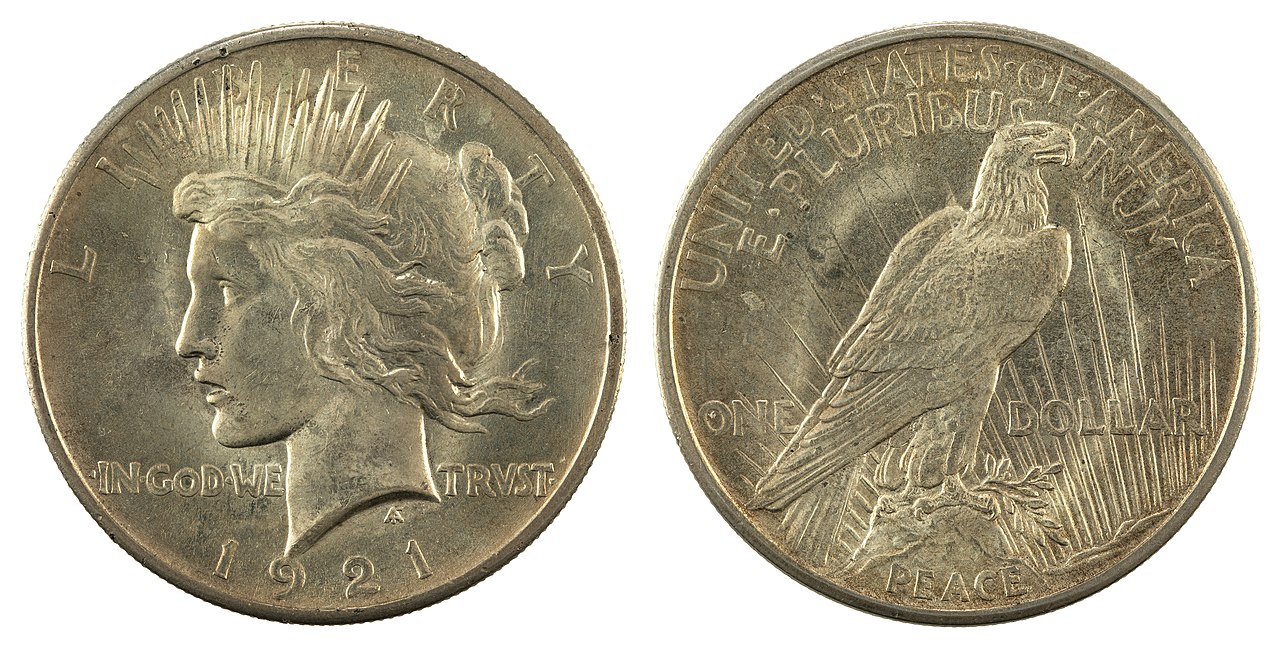
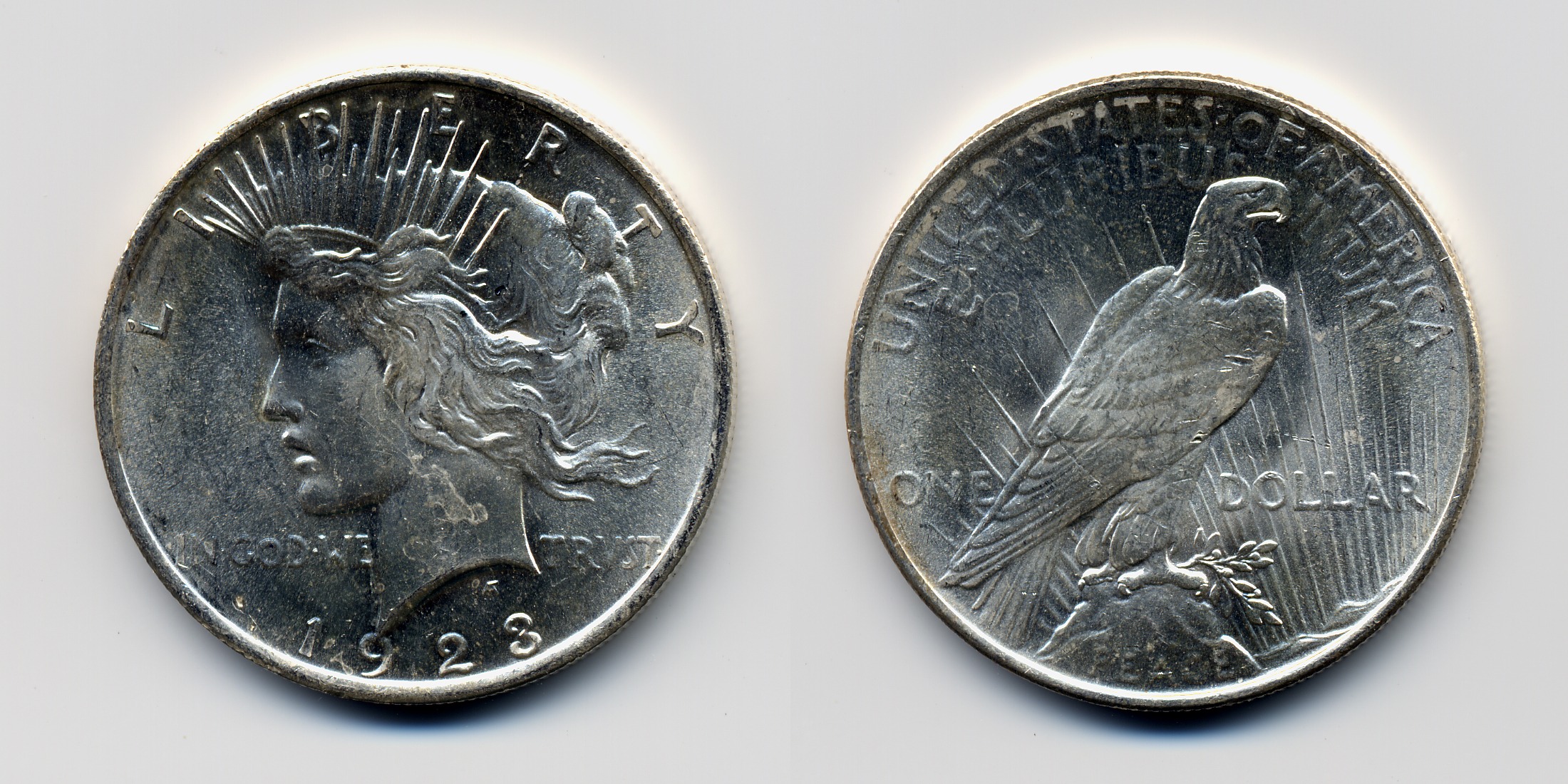
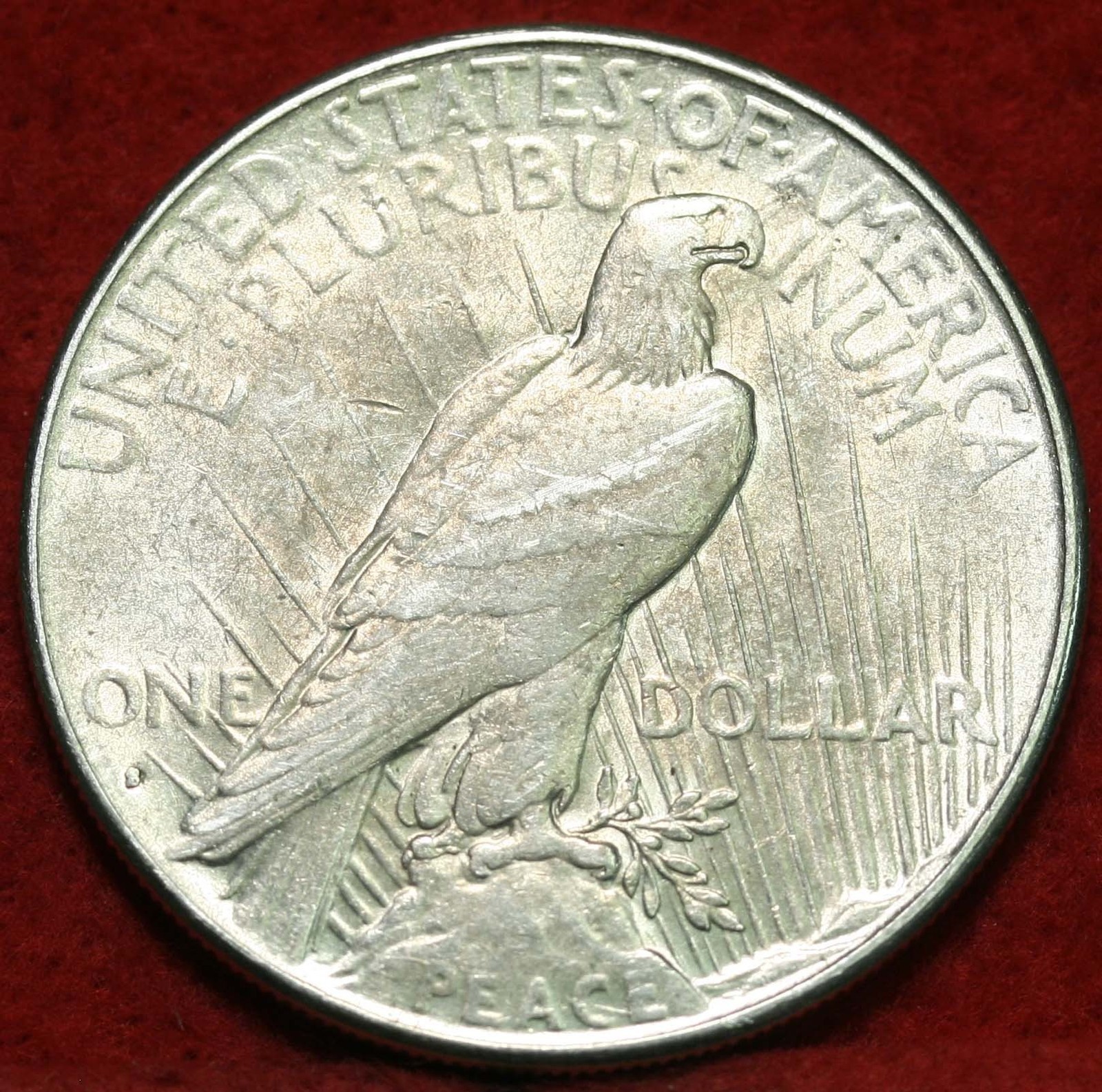
The Peace dollar holds a special place in American coinage. Designed by Italian-American sculptor Anthony de Francisci, the coin was born from the nation's desire to commemorate the end of World War I. The obverse features the head and neck of the Goddess of Liberty in profile, modeled after de Francisci's wife, Teresa Cafarelli. The reverse depicts a bald eagle at rest perched on a rock, clutching an olive branch, with the word "PEACE" inscribed below — the only U.S. coin to bear that inscription. Struck at three mints — Philadelphia, Denver, and San Francisco — the series spans 24 different date-and-mintmark combinations across two production periods: 1921–1928 and 1934–1935. The Peace dollar replaced the Morgan dollar and remains the last circulating U.S. dollar coin struck in 90% silver.
Peace Dollar Design and Specifications
Anthony de Francisci won a design competition organized by the Commission of Fine Arts in late 1921, beating out seven other prominent sculptors despite being the youngest entrant. Treasury Secretary Andrew Mellon approved the design in December 1921, and the first Peace dollars were struck at the Philadelphia Mint on December 28, 1921.
| Specification | Detail |
|---|---|
| Composition | 90% silver, 10% copper |
| Weight | 26.73 grams |
| Diameter | 38.1 mm (1.5 inches) |
| Edge | Reeded |
| Silver Content | 0.7734 troy ounces pure silver |
| Designer | Anthony de Francisci |
| Mints | Philadelphia (no mark), Denver (D), San Francisco (S) |
High Relief vs. Low Relief
The Peace dollar has two distinct design subtypes:
- High Relief (1921 only): The first-year coins were struck in high relief, similar to the artistic ambitions of the 1907 Saint-Gaudens double eagle. The deep relief caused production difficulties — dies wore out quickly, and coins wouldn't stack properly for banking. Only 1,006,473 were struck before the Mint switched to a shallower design
- Low Relief (1922–1935): Chief Engraver George T. Morgan modified de Francisci's design to reduce the relief, enabling faster production and better stacking. All subsequent Peace dollars use this flatter profile, which is sometimes criticized for losing some of the original design's sculptural beauty
Peace Dollar Value Chart: Common Dates
The most affordable Peace dollars come from the high-mintage Philadelphia and Denver issues of 1922–1925. Even common dates carry significant value because of their silver content — at current silver prices, the melt value alone exceeds $25.
| Grade | Value Range |
|---|---|
| About Good (AG-3) | $25–$30 |
| Good (G-4) | $28–$33 |
| Very Good (VG-8) | $29–$35 |
| Fine (F-12) | $30–$38 |
| Very Fine (VF-20) | $32–$42 |
| Extremely Fine (EF-40) | $35–$50 |
| About Uncirculated (AU-50) | $38–$60 |
| Uncirculated (MS-60) | $42–$70 |
| Choice Uncirculated (MS-63) | $55–$100 |
| Gem Uncirculated (MS-65) | $100–$275 |
| Superb Gem (MS-66+) | $250–$1,500+ |
These values apply to dates like 1922, 1922-D, 1923, 1923-D, 1924, and 1925. Peace dollars in MS-65 and above become scarce even for common dates because the design's high points (Liberty's hair, the eagle's feathers) are extremely susceptible to contact marks from bag handling at banks.
Key Date Peace Dollar Values
Key dates are the coins that drive the most collector interest and command the highest premiums. In the Peace dollar series, low mintage alone doesn't always determine rarity — strike quality and survival rates in high grades matter enormously.
1928-P Peace Dollar Value
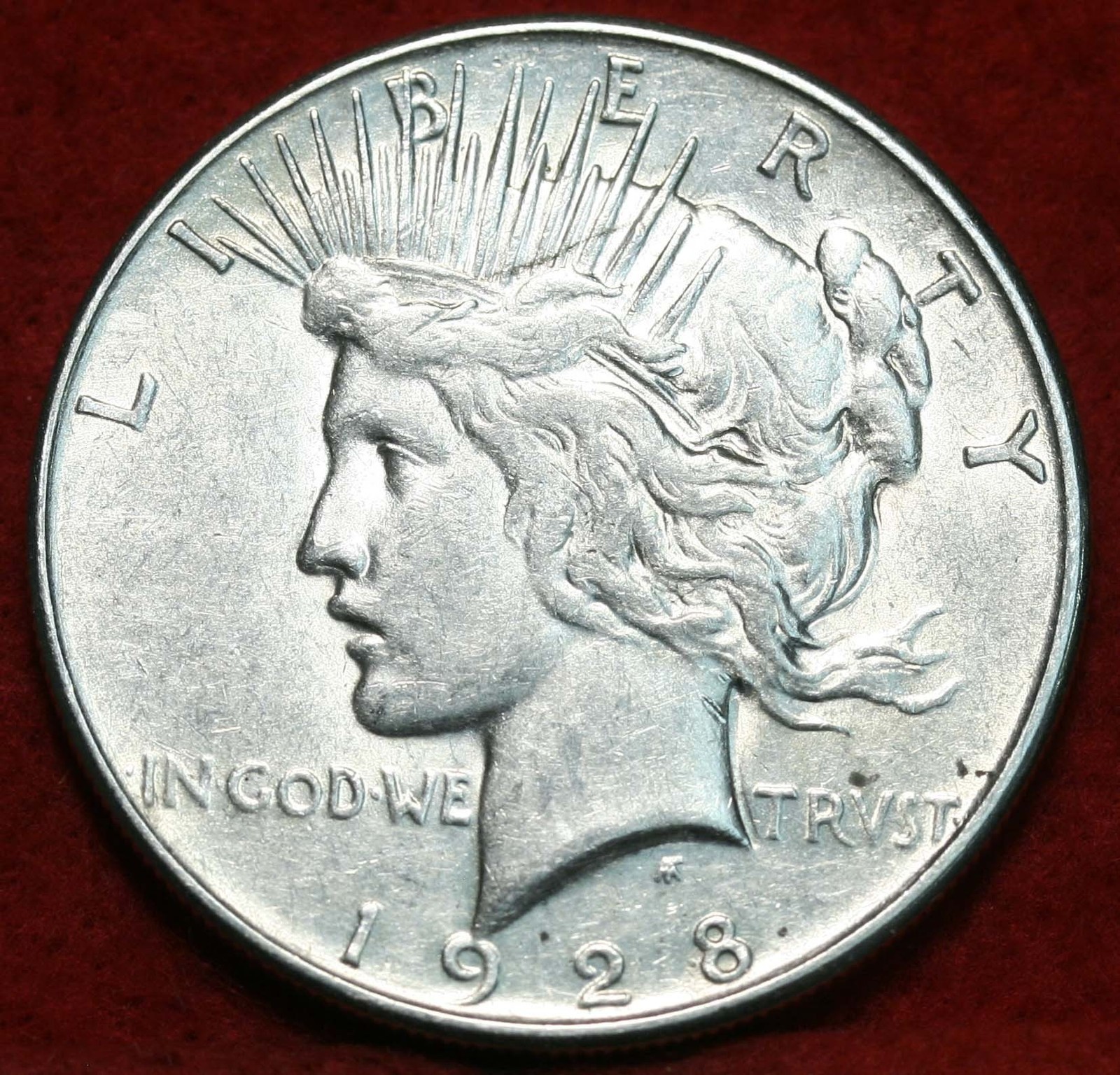
The 1928 Philadelphia issue is the undisputed key date of the Peace dollar series, with the lowest mintage of any regular issue at just 360,649 coins. This coin is heavily sought by collectors and frequently counterfeited.
| Grade | Value Range |
|---|---|
| Good (G-4) | $225–$300 |
| Very Good (VG-8) | $250–$340 |
| Fine (F-12) | $275–$375 |
| Very Fine (VF-20) | $300–$425 |
| Extremely Fine (EF-40) | $350–$500 |
| About Uncirculated (AU-50) | $425–$650 |
| Uncirculated (MS-60) | $550–$800 |
| Choice Uncirculated (MS-63) | $800–$1,400 |
| Gem Uncirculated (MS-65) | $3,000–$5,500 |
| Superb Gem (MS-66+) | $8,000–$25,000+ |
Authentication by PCGS or NGC is essential for any purported 1928 Peace dollar. The most common counterfeits involve adding or altering mint marks on the more common 1928-S to simulate the rare Philadelphia issue (which has no mint mark).
1934-S Peace Dollar Value
The 1934-S is the condition rarity king of the Peace dollar series. While its mintage of 1,011,000 isn't the lowest, the San Francisco Mint's notoriously weak strikes and heavy bag handling resulted in very few surviving examples in high grades. In gem condition (MS-65), the 1934-S is one of the most valuable 20th-century U.S. coins.
| Grade | Value Range |
|---|---|
| Good (G-4) | $35–$50 |
| Very Good (VG-8) | $40–$60 |
| Fine (F-12) | $50–$75 |
| Very Fine (VF-20) | $65–$100 |
| Extremely Fine (EF-40) | $100–$200 |
| About Uncirculated (AU-50) | $250–$600 |
| Uncirculated (MS-60) | $500–$1,200 |
| Choice Uncirculated (MS-63) | $2,500–$6,000 |
| Gem Uncirculated (MS-65) | $25,000–$135,000+ |
The enormous jump between MS-63 and MS-65 values reflects the extreme rarity of well-struck, mark-free examples. Most 1934-S Peace dollars exhibit mushy central details and heavy bag marks even in uncirculated condition.
1925-S Peace Dollar Value
The 1925-S has a mintage of 1,610,000 but is genuinely rare in gem grades due to consistently weak strikes at the San Francisco Mint. Most examples show flat hair detail and incomplete eagle feathers even in technically uncirculated condition.
| Grade | Value Range |
|---|---|
| Good (G-4) | $28–$38 |
| Very Good (VG-8) | $30–$42 |
| Fine (F-12) | $32–$48 |
| Very Fine (VF-20) | $38–$55 |
| Extremely Fine (EF-40) | $50–$85 |
| About Uncirculated (AU-50) | $85–$175 |
| Uncirculated (MS-60) | $150–$350 |
| Choice Uncirculated (MS-63) | $500–$1,500 |
| Gem Uncirculated (MS-65) | $12,000–$31,000+ |
1921 High Relief Peace Dollar Value
The first-year 1921 is a popular type coin struck in high relief with a mintage of 1,006,473. The deeper sculpting makes this issue distinctly different from all subsequent Peace dollars and commands a premium as a one-year design subtype.
| Grade | Value Range |
|---|---|
| Good (G-4) | $90–$130 |
| Very Good (VG-8) | $100–$150 |
| Fine (F-12) | $115–$175 |
| Very Fine (VF-20) | $130–$200 |
| Extremely Fine (EF-40) | $160–$250 |
| About Uncirculated (AU-50) | $200–$350 |
| Uncirculated (MS-60) | $275–$425 |
| Choice Uncirculated (MS-63) | $400–$700 |
| Gem Uncirculated (MS-65) | $2,500–$6,000 |
| Superb Gem (MS-66+) | $8,000–$40,000+ |
Complete Peace Dollar Value by Year
1921–1925: The First Production Run
The first production period saw the highest mintages in the series, with 1922 Philadelphia leading at over 51 million coins. These years form the affordable backbone of most Peace dollar collections.
| Date | Mintage | G-4 | VF-20 | MS-63 |
|---|---|---|---|---|
| 1921 (High Relief) | 1,006,473 | $90–$130 | $130–$200 | $400–$700 |
| 1922 | 51,737,000 | $28–$33 | $32–$40 | $50–$80 |
| 1922-D | 15,063,000 | $28–$33 | $32–$42 | $55–$90 |
| 1922-S | 17,475,000 | $28–$33 | $32–$42 | $55–$100 |
| 1923 | 30,800,000 | $28–$33 | $32–$40 | $50–$80 |
| 1923-D | 6,811,000 | $28–$35 | $35–$48 | $75–$150 |
| 1923-S | 19,020,000 | $28–$33 | $32–$45 | $60–$115 |
| 1924 | 11,811,000 | $28–$33 | $32–$40 | $50–$80 |
| 1924-S | 1,728,000 | $30–$40 | $50–$90 | $350–$1,200 |
| 1925 | 10,198,000 | $28–$33 | $32–$40 | $50–$80 |
| 1925-S | 1,610,000 | $28–$38 | $38–$55 | $500–$1,500 |
The 1922 Philadelphia is the most common Peace dollar by a wide margin and serves as the ideal starter coin for new collectors. The 1924-S and 1925-S are semi-key dates that become expensive in uncirculated grades due to weak strikes and low survival rates.
1926–1928: Lower Mintages
Production dropped significantly in the mid-1920s as the Treasury's demand for new silver dollars decreased. Every date from this period carries a premium over the common 1922–1925 issues.
| Date | Mintage | G-4 | VF-20 | MS-63 |
|---|---|---|---|---|
| 1926 | 1,939,000 | $30–$38 | $35–$48 | $75–$150 |
| 1926-D | 2,348,700 | $30–$38 | $35–$50 | $80–$165 |
| 1926-S | 6,980,000 | $28–$35 | $33–$45 | $60–$120 |
| 1927 | 848,000 | $35–$50 | $50–$75 | $200–$450 |
| 1927-D | 1,268,900 | $35–$50 | $50–$85 | $200–$500 |
| 1927-S | 866,000 | $35–$50 | $50–$80 | $250–$750 |
| 1928 | 360,649 | $225–$300 | $300–$425 | $800–$1,400 |
| 1928-S | 1,632,000 | $30–$40 | $40–$55 | $125–$350 |
The 1927 Philadelphia (848,000 mintage) and 1927-S (866,000) are both scarce dates. The 1928 is the rarest regular-issue Peace dollar and the coin most collectors need the longest to acquire.
1934–1935: The Final Years
After a five-year gap (1929–1933) when no silver dollars were produced — coinciding with the Great Depression — the Peace dollar returned for a brief two-year run. The 1934-S is the condition rarity superstar of the entire series.
| Date | Mintage | G-4 | VF-20 | MS-63 |
|---|---|---|---|---|
| 1934 | 954,057 | $35–$48 | $42–$60 | $100–$200 |
| 1934-D | 1,569,500 | $35–$45 | $42–$58 | $110–$225 |
| 1934-S | 1,011,000 | $35–$50 | $65–$100 | $2,500–$6,000 |
| 1935 | 1,576,000 | $30–$40 | $38–$52 | $85–$175 |
| 1935-S | 1,964,000 | $30–$40 | $38–$52 | $110–$250 |
The 1934-S value explosion in uncirculated grades — from $50 in VF-20 to potentially $135,000 in MS-65 — is one of the most dramatic grade-to-value curves in all of U.S. numismatics. It underscores why condition is often more important than mintage alone.
Strike Quality: The Hidden Value Factor
Unlike many other U.S. coin series, strike quality is a critical consideration for Peace dollars. The United States Mint facilities in Denver and especially San Francisco consistently produced Peace dollars with weaker strikes than Philadelphia.
What to Look For in a Well-Struck Peace Dollar
- Liberty's hair detail: The strands above the ear and at the center of the head should show individual definition, not a flat, mushy mass
- Ray tips on crown: The radiating lines in Liberty's crown should be sharp and well-defined
- Eagle's breast feathers (reverse): Individual feathers on the eagle's chest should be visible, not blended together
- Wing feathers: The primary feathers on the eagle's wing should show separation
- PEACE lettering: The word should be fully struck and clear on the rock below the eagle
A well-struck Peace dollar in MS-63 can be worth as much as a weakly-struck example in MS-64 because collectors increasingly value eye appeal alongside technical grade. This is particularly true for San Francisco issues, where a fully struck coin is the exception rather than the rule.
Peace Dollar Error and Variety Guide
| Error/Variety | Date | Value Range |
|---|---|---|
| 1921 High Relief (type coin) | 1921 | $90–$40,000+ |
| 1922 Die Break "Ear Ring" | 1922 | $25–$200+ |
| 1922 No D (Weak D) | 1922-D | $30–$150 |
| 1934-D Double Die Obverse | 1934-D | $50–$1,000+ |
| 1935 Double Die Reverse | 1935 | $40–$500+ |
| Die Cracks and Cuds | Various | $10–$300+ |
| Off-Center Strikes | Various | $50–$500+ |
| Wrong Planchet Strikes | Various | $1,000–$10,000+ |
| Clipped Planchets | Various | $25–$200 |
The 1922 "Ear Ring" Die Break
One of the most popular Peace dollar varieties is the 1922 "Ear Ring" — a die crack that runs from Liberty's ear creating the appearance of an earring or dangling jewelry. Multiple die states exist, with the most dramatic breaks commanding the highest premiums. This variety is fun to search for because the 1922 Philadelphia is so common and inexpensive.
The 1934-D Double Die Obverse
The 1934-D DDO shows clear doubling on the word "LIBERTY" and the date. Strong examples are scarce and command premiums of $100–$1,000+ depending on grade and the visibility of the doubling.
How to Grade Peace Dollars
Accurate grading directly determines value. The Sheldon scale runs from 1 to 70, with specific grade points being most important for Peace dollars.
Key Wear Points
- Hair above ear: The hair strands directly above Liberty's ear are the highest point on the obverse and show friction first — this is the primary grading focal point
- Crown rays: The radiating lines in Liberty's tiara/crown flatten with circulation
- Cheek: Liberty's cheek shows light friction before the lower-relief areas
- Eagle's breast and wing: The eagle's chest feathers and the top of the near wing are the highest points on the reverse
- Rock detail: The rocky perch below the eagle wears progressively
Quick Grading Reference
| Grade | What to Look For |
|---|---|
| About Good (AG-3) | Outline of Liberty and eagle visible, date readable, most detail worn flat |
| Good (G-4) | Major design elements visible but well-worn, date and lettering clear |
| Very Good (VG-8) | Hair strands at center beginning to show, eagle's wing outline defined |
| Fine (F-12) | Some hair detail above ear, eagle feathers partially visible |
| Very Fine (VF-20) | Hair detail mostly visible with some flatness at highest points, eagle feathers clear |
| Extremely Fine (EF-40) | Light wear on hair above ear and cheek only, nearly full eagle feather detail |
| About Uncirculated (AU-50) | Trace wear on hair, cheek, and eagle's breast; substantial luster remains |
| Uncirculated (MS-60+) | No wear; graded by luster, strike, surface marks, and eye appeal |
For Peace dollars, the jump from AU-50 to MS-60 is critical because many coins were stored in bank vaults in original bags, creating a supply of uncirculated examples with varying degrees of bag marks. A heavily bag-marked MS-60 may actually look less attractive than a lightly circulated AU-58.
Peace Dollar Collecting Strategies
Strategy 1: Short Set (1922–1925, Budget-Friendly)
Collect one Peace dollar from each date in the highest-mintage years. This 11-coin set (1922, 1922-D, 1922-S, 1923, 1923-D, 1923-S, 1924, 1924-S, 1925, 1925-S) can be assembled in VF-20 for approximately $350–$500. It's an excellent way to own a variety of mint marks and learn the differences in strike quality between the three mints.
Strategy 2: Complete Date and Mint Set
A complete set of all 24 date-and-mintmark combinations in circulated grades (VF-20 to EF-40) will cost approximately $1,500–$3,000, with the 1928 accounting for 15–25% of the total. This is one of the most achievable 20th-century silver dollar sets because no single coin is prohibitively expensive in circulated condition.
Strategy 3: Key Dates and Semi-Keys Only
Focus on the coins with the strongest long-term investment potential: the 1921 High Relief, 1928, 1927, 1927-S, 1934-S, and 1925-S. Buy the best grade you can afford and always insist on PCGS or NGC certification for coins valued over $200.
Strategy 4: Gem Set (Advanced)
Assembling a complete Peace dollar set in MS-65 is one of the great challenges in 20th-century numismatics. Common dates in MS-65 are available for $100–$275, but the 1934-S alone can cost $25,000–$135,000. The full MS-65 set has been valued at over $200,000.
Estimated Budget by Completion Level
| Collection Goal | Estimated Cost |
|---|---|
| Short set (1922–1925), VF-20 | $350–$500 |
| Complete by date and mint, VF-20 | $1,500–$3,000 |
| Complete by date and mint, MS-63 | $5,000–$12,000 |
| Complete by date and mint, MS-65 | $75,000–$200,000+ |
Where to Buy Peace Dollars
Coin Dealers and Shows
Peace dollars are among the most liquid coins in the numismatic market. Most coin dealers carry a selection of common dates, and major shows like the ANA World's Fair of Money feature hundreds of dealers with Peace dollars at every price level. The common 1922 Philadelphia is often used as a bullion-adjacent investment coin and can be purchased near silver melt value.
Online Auctions and Marketplaces
- Heritage Auctions: The premier auction house for certified Peace dollars, especially key dates and gem-quality coins
- eBay: Wide selection at all price points — always buy PCGS or NGC certified coins for purchases over $100
- Great Collections: Online auction site with competitive buyer's premiums and strong Peace dollar offerings
Silver Bullion Dealers
Common-date Peace dollars are frequently sold as "generic silver dollars" by bullion dealers at modest premiums over silver melt value. This can be the most economical way to acquire circulated examples for a date set, though you may not get your choice of dates.
Authentication and Counterfeits
The 1928 Peace dollar is the most frequently counterfeited date in the series. Common deceptions include:
- Altered mint marks: Removing the "S" from a common 1928-S to simulate the rare 1928-P (no mint mark)
- Cast counterfeits: Low-quality reproductions with soft details, seam lines, and incorrect weight (should be 26.73 grams)
- Struck counterfeits: Higher-quality fakes from counterfeit dies, sometimes with correct weight but slightly wrong dimensions or reeding
- Chinese counterfeits: Mass-produced fakes with improving quality that can deceive casual observers
For any Peace dollar with a claimed value over $200, insist on PCGS or NGC certification. Both services guarantee authenticity and provide a standardized grade. The 1927 and 1934-S are also counterfeited with enough frequency to warrant certification for higher-grade examples.
Where Is the Mint Mark?
The mint mark on Peace dollars is located on the reverse (tails side), near the bottom, just above the tip of the eagle's tail feathers and to the left of the word "ONE." Look for "D" (Denver) or "S" (San Francisco). Philadelphia coins have no mint mark.
Peace Dollar Investment Outlook
Peace dollars have been consistently strong performers in the numismatic market, supported by multiple demand drivers:
- Last circulating silver dollar: The Peace dollar holds the distinction of being the final U.S. dollar coin struck in 90% silver for general circulation, giving it permanent historical significance
- Silver content: Each coin contains 0.7734 troy ounces of pure silver, providing a bullion floor that rises with silver prices
- Art Deco appeal: De Francisci's design is widely regarded as one of the most beautiful in American coinage, attracting collectors who appreciate artistic merit
- Completable set: With only 24 date-and-mintmark combinations, the series is achievable for dedicated collectors — unlike the Morgan dollar series with its 100+ varieties
- Crossover demand: Peace dollars appeal to type collectors, series completists, silver investors, and casual collectors alike
- Strong market liquidity: Common dates can be bought and sold easily at published bid-ask spreads
Frequently Asked Questions
How much is a Peace dollar worth?
Most common-date Peace dollars (1922–1925 Philadelphia and Denver issues) are worth $30–$55 in circulated condition, anchored by their silver melt value. Key dates like the 1928 ($225+ in Good) and condition rarities like the 1934-S ($35 in circulated, up to $135,000 in MS-65) are worth significantly more. The year, mint mark, and condition all affect value.
What is the most valuable Peace dollar?
The most valuable Peace dollar is the 1934-S in gem uncirculated condition, with MS-65 examples valued at $25,000–$135,000+. The 1928 Philadelphia is the rarest by mintage (360,649 coins) and commands $225+ even in well-worn condition. The 1921 High Relief is the most sought-after type coin, with MS-66+ examples reaching $40,000+.
How can I tell if my Peace dollar is valuable?
Check the date and mint mark first. The mint mark is on the reverse, near the eagle's tail feathers. Key dates to look for: 1921 (high relief), 1927, 1927-S, 1928 (no mint mark), 1934-S, and 1925-S. Next, assess condition — uncirculated examples with sharp strikes and minimal bag marks are worth substantially more. CoinID can instantly identify your Peace dollar's date, mint mark, and approximate value from a photo.
Are all Peace dollars silver?
Yes. All genuine Peace dollars struck from 1921 to 1935 are composed of 90% silver and 10% copper, containing 0.7734 troy ounces of pure silver. The 2021 and 2023 commemorative restrikes by the U.S. Mint were struck in .999 fine silver at a different weight. Original Peace dollars always have a silver melt value that provides a baseline for their market price.
Should I clean my Peace dollar?
Never clean a Peace dollar. Natural toning — from light champagne to deep rainbow colors — is considered desirable by collectors and can actually increase a coin's value. Cleaning removes this toning, damages the surface at a microscopic level, and reduces value by 30–70%. Cleaned coins receive "Details" grades from PCGS and NGC, significantly reducing their market value compared to problem-free examples at the same technical grade.
What's the difference between the 1921 and 1922 Peace dollar?
The 1921 Peace dollar was struck in high relief with deeper sculpted features, giving it a more three-dimensional, medallic appearance. Starting in 1922, the relief was reduced to a flatter profile for practical production reasons. The 1921 high relief is considered more artistically beautiful and commands a premium as a distinct design subtype. Visually, the 1921 appears notably "deeper" when viewed at an angle.
Why were no Peace dollars made from 1929 to 1933?
The Great Depression eliminated demand for new silver dollars. Banks had millions of existing silver dollars (both Morgan and Peace) in their vaults, and the economic collapse reduced commerce to a level where new production was unnecessary. When the Treasury authorized new coinage in 1934, it was primarily to comply with the Silver Purchase Act, which required the government to buy domestically mined silver.
Can I find Peace dollars in circulation?
It's extremely unlikely. Peace dollars were largely withdrawn from active circulation by the 1960s, and the last major Treasury releases of silver dollars occurred in 1964. However, Peace dollars regularly appear at coin shops, online auctions, estate sales, and occasionally in inherited collections. Your best bet for finding one below market price is sorting through old collections, estate sales, and bank-held accumulations.
How do I tell if my Peace dollar is a fake?
Genuine Peace dollars weigh 26.73 grams and have a diameter of 38.1 mm. Check the reeding (edge grooves) — counterfeits often have incorrect spacing or depth. The coin should have a silver ring tone when balanced on a fingertip and lightly tapped. Examine details under magnification — genuine coins show crisp, flowing design elements while fakes often have mushy or "soft" details. For any coin worth over $200, get it certified by PCGS or NGC.
Conclusion
The Peace dollar series (1921–1935) stands as one of the most rewarding and artistically significant collecting areas in American numismatics. With only 24 date-and-mintmark combinations, the series is completable at a reasonable cost in circulated grades — roughly $1,500–$3,000 for a full set — while offering genuine rarity challenges for those pursuing gem-quality specimens. The combination of Anthony de Francisci's iconic Art Deco design, 90% silver composition, and the powerful symbolism of "Peace" after World War I gives these coins an appeal that transcends pure numismatics. Whether you've discovered a Peace dollar in a family collection, are building a complete date set, or are hunting for that elusive 1934-S in gem condition, CoinID helps you instantly identify your Peace dollars, check for valuable dates and varieties, and get current market values — just snap a photo and let the app do the work.