Quick Answer: Most Sacagawea dollars (2000–present) are worth $1 to $5 in circulated and low-uncirculated grades. The rare 2000-P Cheerios dollar with enhanced tail feathers is worth $3,000–$25,000+ depending on grade. The 2000-P Wounded Eagle error brings $75–$415, and the ultra-rare Washington quarter/Sacagawea mule error has sold for up to $204,000.
The Sacagawea dollar—often called the "golden dollar" for its distinctive manganese brass color—was introduced in 2000 to replace the Susan B. Anthony dollar that had been widely confused with the quarter. Designed by Glenna Goodacre, the obverse features Sacagawea, the Shoshone woman who helped guide the Lewis and Clark Expedition, carrying her infant son Jean Baptiste on her back. Artist Randy'L He-dow Teton, a modern Shoshone woman, served as the model—making her one of the few living people to appear on a U.S. coin.
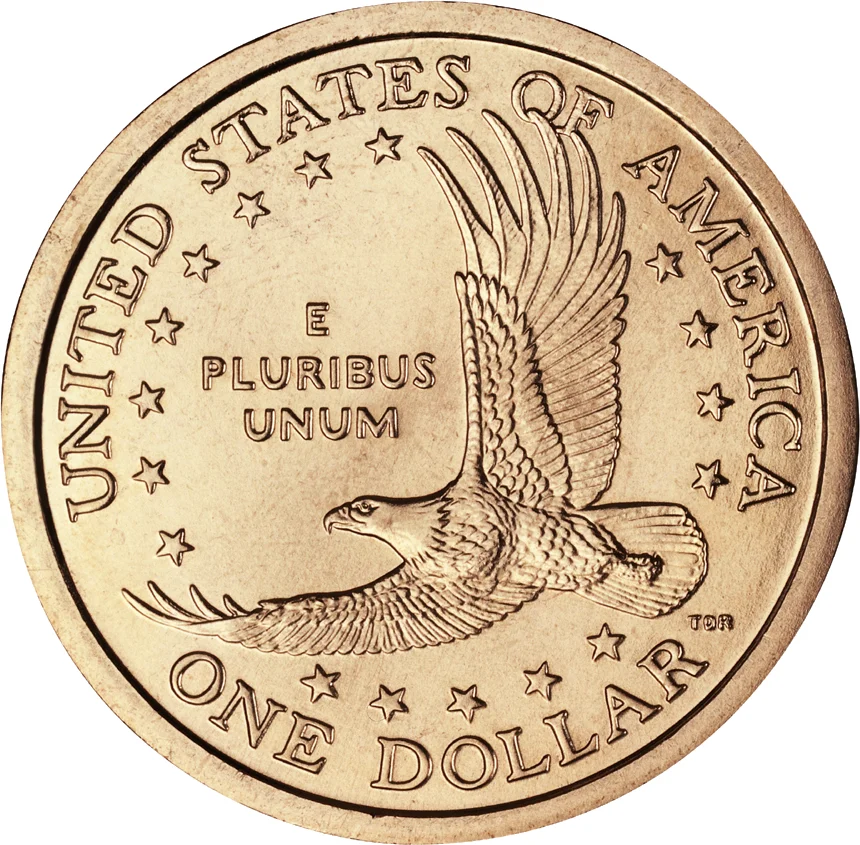
Sacagawea Dollar Overview
Design and Specifications
- Obverse: Sacagawea with infant Jean Baptiste by Glenna Goodacre
- Original Reverse (2000–2008): Soaring eagle by Thomas D. Rogers
- Native American Reverse (2009–present): Annually changing designs honoring Native American contributions
- Composition: 88.5% copper, 6% zinc, 3.5% manganese, 2% nickel (manganese brass)
- Weight: 8.1 grams
- Diameter: 26.5 mm
- Edge: Plain (lettered edge added in 2009 for Native American dollars)
The U.S. Mint selected the golden color and smooth edge specifically to distinguish the coin from the quarter—a critical improvement over the failed SBA dollar.
Why Most Sacagawea Dollars Are Worth Face Value
Despite the Mint producing billions of Sacagawea dollars, Americans never adopted them for daily commerce. Massive mintages (767 million in 2000 alone) combined with low circulation mean most dates are extremely common. The vast majority are worth $1 in any condition. The exceptions—error coins, proofs, and superb gem grades—are what make this series exciting for collectors.
Sacagawea Dollar Value Chart (2000–2008)
The original eagle reverse era. These coins had the highest mintages of the series.
| Year & Mint | Mintage | Circulated | MS-65 | MS-67 | MS-68 |
|---|---|---|---|---|---|
| 2000-P | 767,140,000 | $1 | $8–$15 | $200–$500 | $3,000–$5,000 |
| 2000-D | 518,916,000 | $1 | $8–$15 | $200–$450 | $3,000–$5,000 |
| 2000-S Proof | 4,047,993 | — | — | PR-69: $20–$30 | PR-70: $100–$250 |
| 2001-P | 62,468,000 | $1 | $5–$10 | $40–$80 | $500+ |
| 2001-D | 70,939,500 | $1 | $5–$10 | $40–$80 | $500+ |
| 2001-S Proof | 3,184,606 | — | — | PR-69: $15–$25 | PR-70: $75–$150 |
| 2002-P | 3,865,610 | $1.50–$3 | $8–$15 | $50–$100 | $600+ |
| 2002-D | 3,732,000 | $1.50–$3 | $8–$15 | $50–$100 | $600+ |
| 2002-S Proof | 3,211,995 | — | — | PR-69: $15–$25 | PR-70: $75–$150 |
| 2003-P | 3,080,000 | $1.50–$3 | $8–$15 | $50–$100 | $600+ |
| 2003-D | 3,080,000 | $1.50–$3 | $8–$15 | $50–$100 | $600+ |
| 2004-P | 2,660,000 | $2–$4 | $8–$15 | $60–$120 | $700+ |
| 2004-D | 2,660,000 | $2–$4 | $8–$15 | $60–$120 | $700+ |
| 2005-P | 2,520,000 | $2–$4 | $8–$15 | $60–$120 | $700+ |
| 2005-D | 2,520,000 | $2–$4 | $8–$15 | $60–$120 | $700+ |
| 2006-P | 4,900,000 | $1.50–$3 | $7–$12 | $50–$100 | $600+ |
| 2006-D | 2,800,000 | $2–$4 | $8–$15 | $60–$120 | $700+ |
| 2007-P | 3,640,000 | $1.50–$3 | $7–$12 | $50–$100 | $600+ |
| 2007-D | 3,920,000 | $1.50–$3 | $7–$12 | $50–$100 | $600+ |
| 2008-P | 1,820,000 | $2–$5 | $8–$15 | $60–$120 | $700+ |
| 2008-D | 1,820,000 | $2–$5 | $8–$15 | $60–$120 | $700+ |
After 2001, mintages dropped dramatically as the Mint produced coins primarily for collectors, not commerce. The 2002–2008 dates were sold only in mint sets and had far lower production numbers—making them slightly more valuable.
Sacagawea Dollar Value Chart: Native American Dollars (2009–Present)
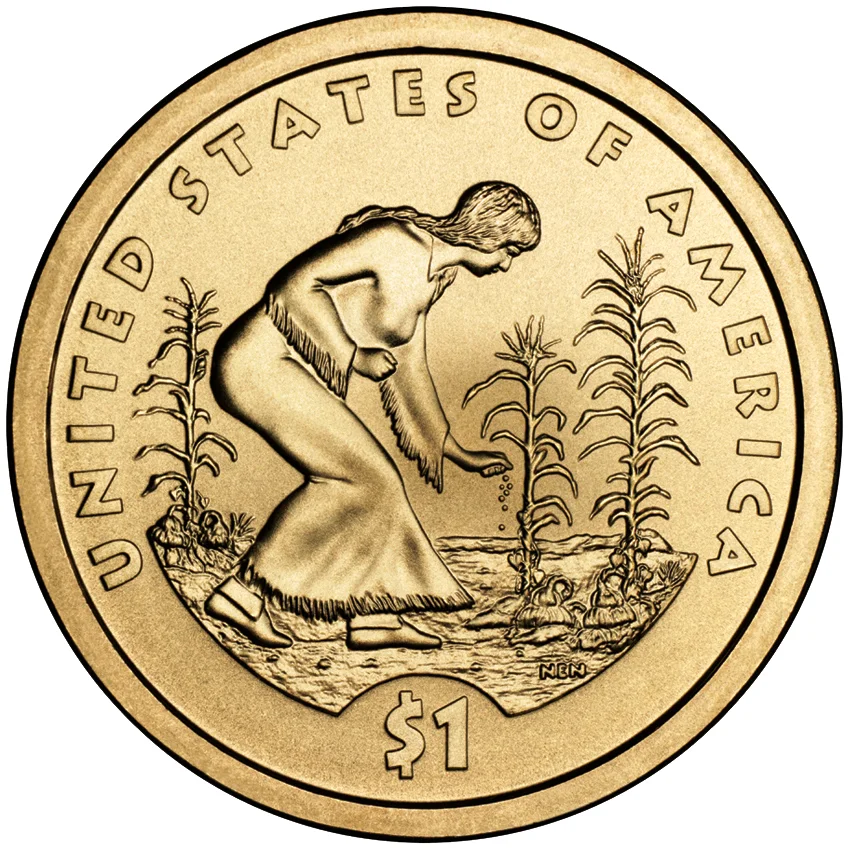
In 2009, Congress mandated annually changing reverse designs celebrating Native American contributions. These are sometimes called "Native American dollars."
| Year | Reverse Theme | Circulated | MS-65 | MS-67 |
|---|---|---|---|---|
| 2009 | Three Sisters Agriculture | $1 | $5–$8 | $30–$60 |
| 2010 | Great Law of Peace (Haudenosaunee) | $1 | $5–$8 | $30–$60 |
| 2011 | Wampanoag Treaty 1621 | $1 | $5–$8 | $30–$60 |
| 2012 | Trade Routes in the 17th Century | $1 | $5–$8 | $30–$60 |
| 2013 | Treaty with the Delawares 1778 | $1 | $5–$8 | $30–$60 |
| 2014 | Native Hospitality (Lewis & Clark) | $1 | $5–$8 | $30–$60 |
| 2015 | Mohawk Ironworkers | $1 | $5–$8 | $30–$60 |
| 2016 | Code Talkers (WWI & WWII) | $1 | $5–$8 | $30–$60 |
| 2017 | Sequoyah (Cherokee Syllabary) | $1 | $5–$8 | $30–$60 |
| 2018 | Jim Thorpe (Sac and Fox Nation) | $1 | $5–$8 | $30–$60 |
| 2019 | American Indians in the Space Program | $1 | $5–$8 | $30–$60 |
| 2020 | Elizabeth Peratrovich (Anti-Discrimination) | $1 | $5–$8 | $30–$60 |
| 2021 | Military Service Since 1775 | $1 | $5–$8 | $30–$60 |
| 2022 | Ely S. Parker (Tonawanda Seneca) | $1 | $5–$8 | $30–$60 |
| 2023 | Maria Tallchief (Osage Nation) | $1 | $5–$8 | $30–$60 |
| 2024 | Zitkala-Ša (Yankton Dakota Sioux) | $1 | $5–$8 | $30–$60 |
Most Native American dollars from 2012 onward were produced solely for numismatic sales and did not enter general circulation.
Rare and Valuable Sacagawea Dollar Varieties
2000-P Cheerios Dollar (Enhanced Eagle Tail Feathers)
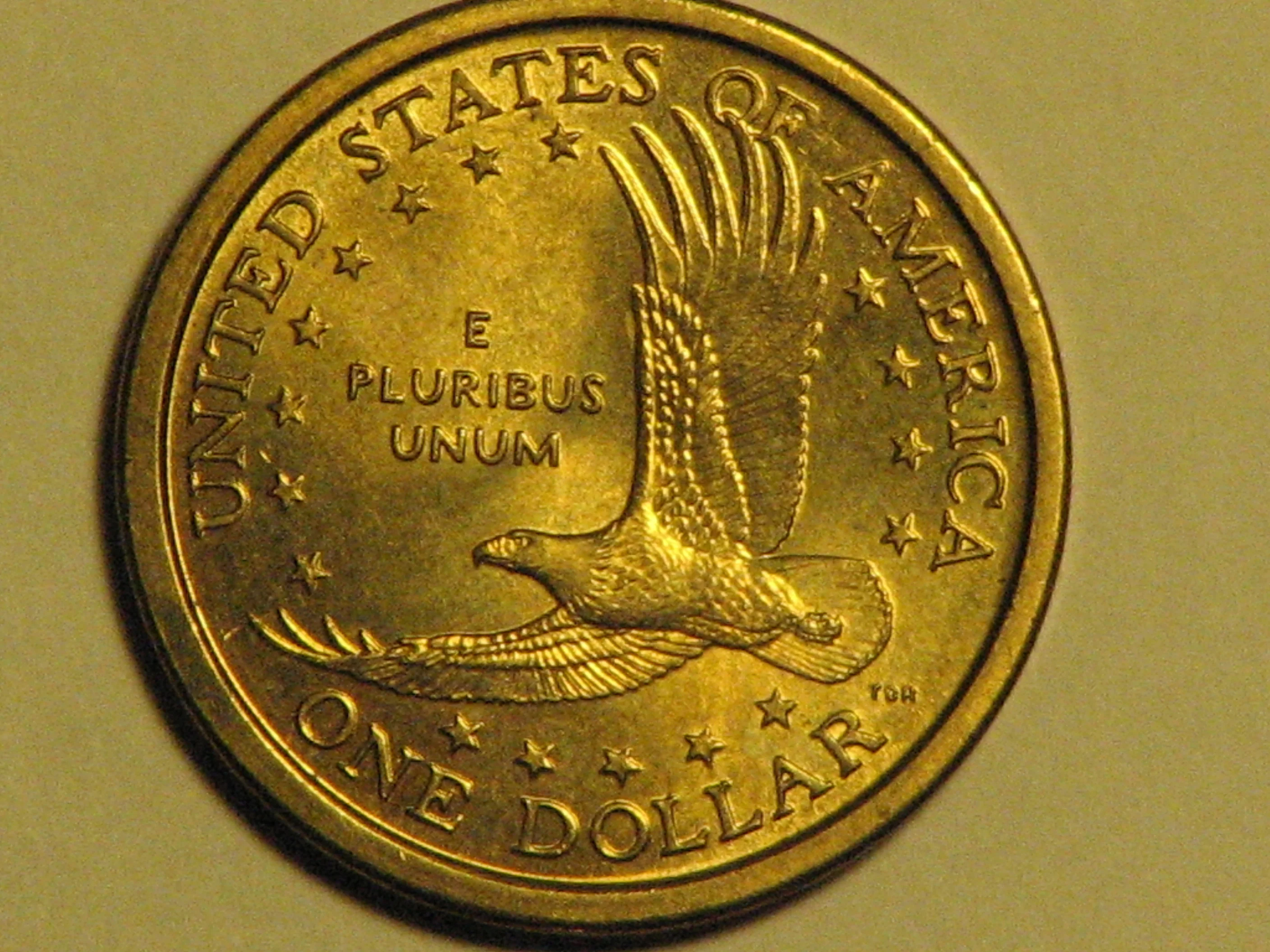
The most famous Sacagawea variety. In January 2000, the U.S. Mint partnered with General Mills to promote the new golden dollar by inserting coins into 5,500 boxes of Cheerios cereal (out of 10 million total promotional boxes). These coins were struck from a prototype reverse die with enhanced, detailed tail feathers on the eagle—notably different from the production coins that followed.
The enhanced feathers show sharply defined individual barbs on the eagle's tail, while the regular production coins have smoother, less detailed feathers. The distinction was first documented in the Cherrypickers' Guide as FS-C1-2000P-901.
| Grade | Cheerios Dollar Value |
|---|---|
| AU (About Uncirculated) | $3,000–$5,000 |
| MS-63 | $5,000–$7,500 |
| MS-64 | $7,500–$10,000 |
| MS-65 | $10,000–$15,000 |
| MS-66+ | $15,000–$30,000+ |
Fewer than 70 confirmed Cheerios dollars have surfaced. PCGS has certified approximately 107 examples, and NGC only two. The record auction price was $29,900 for a PCGS MS-68 specimen at a 2008 Heritage Auction.
2000-P Wounded Eagle Error
A die gouge creates a raised line across the eagle's breast on the reverse, giving the impression the eagle has been "wounded." This error is relatively affordable compared to the Cheerios dollar.
| Grade | Wounded Eagle Value |
|---|---|
| Circulated | $75–$150 |
| MS-63 | $150–$250 |
| MS-65 | $250–$415 |
| MS-67 | $500+ |
2000-P Goodacre Presentation Coins
The Mint paid designer Glenna Goodacre her $5,000 fee in the form of 5,000 Sacagawea dollars. These coins have a distinctive burnished finish (sometimes called a "Satin finish") that differs from regular business strikes.
| Grade | Goodacre Presentation Value |
|---|---|
| Original holder | $400–$650 |
| PCGS/NGC MS-66 | $700–$900 |
| PCGS/NGC MS-67 | $1,000–$1,500+ |
(2000)-P Washington Quarter / Sacagawea Dollar Mule
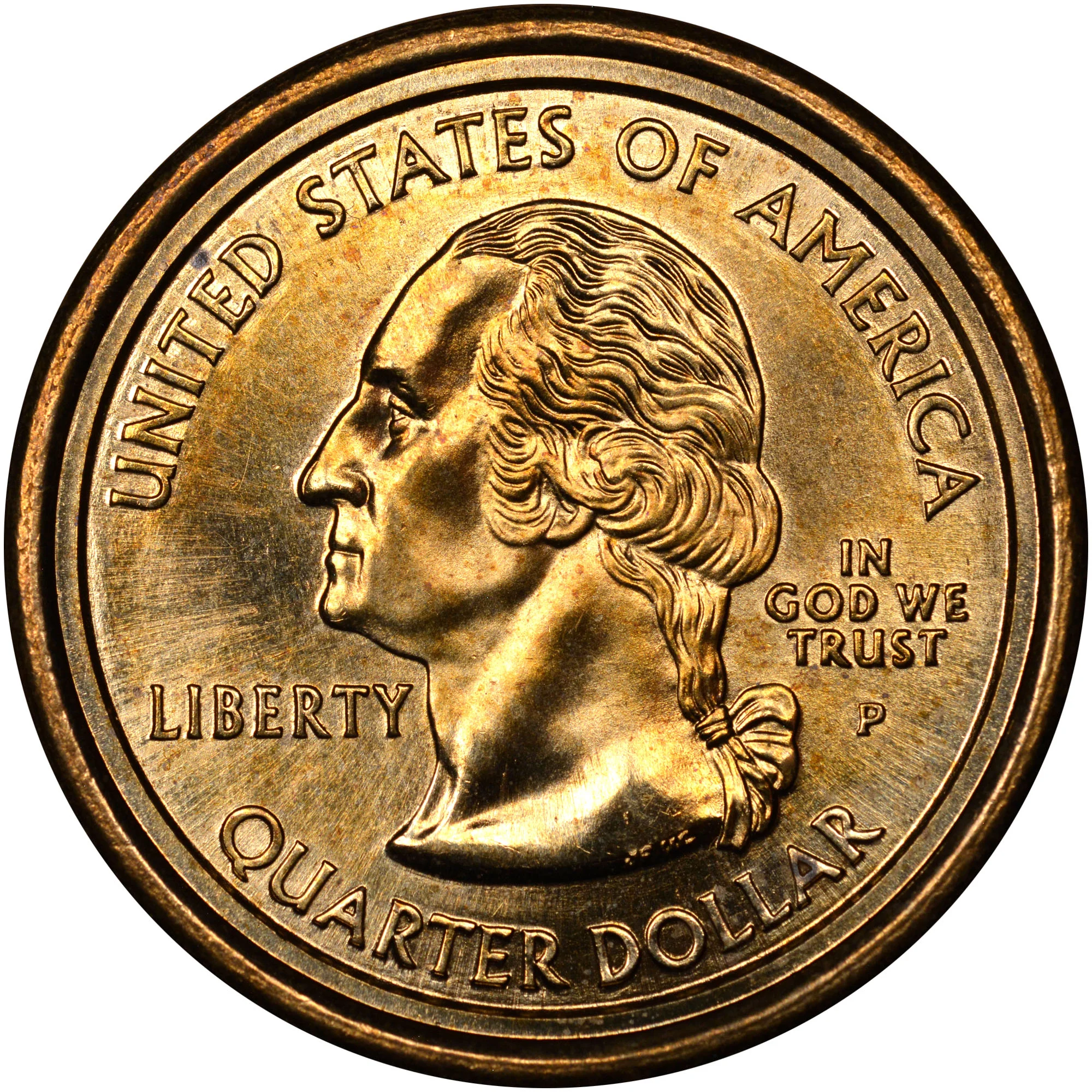
The rarest and most valuable Sacagawea variety. Approximately 18 coins are known that were struck with a Washington quarter obverse die paired with a Sacagawea dollar reverse die—creating a "mule" error (two dies that were never intended to be used together). These coins have the Washington quarter portrait on one side and the Sacagawea eagle on the other, struck on a Sacagawea dollar planchet.
| Grade | Mule Error Value |
|---|---|
| MS-63–MS-64 | $96,000–$144,000 |
| MS-65+ | $144,000–$204,000 |
The highest recorded sale was $204,000 for a top-graded specimen.
2000-P Speared Jaw (FS-401)
A die crack creates a raised line running through Sacagawea's jaw on the obverse.
| Grade | Speared Jaw Value |
|---|---|
| Circulated | $3–$5 |
| MS-65 | $5–$10 |
Doubled Die Varieties
Some 2000 Sacagawea dollars show doubling on lettering or design elements. Values depend on the severity.
| Grade | Doubled Die Value |
|---|---|
| Circulated | $25–$50 |
| MS-65 (dramatic doubling) | $50–$150 |
How to Identify Valuable Sacagawea Dollars
Checking for the Cheerios Dollar
- Look at the date: Must be a 2000-P (Philadelphia mint, no mint mark)
- Examine the eagle's tail feathers: The Cheerios dollar has sharply defined individual feather barbs with fine parallel lines
- Compare to a regular 2000-P: Production coins have smoother, less detailed tail feathers
- Use magnification: A 5x–10x loupe is essential
- Get professional authentication: If you suspect a Cheerios dollar, submit to PCGS or NGC
Checking for the Wounded Eagle
- Look at the eagle's breast on the reverse
- A raised line (from a die gouge) runs diagonally across the eagle
- Most visible without magnification
Checking for the Mule Error
- Check both sides of any 2000-dated golden dollar
- One side should show George Washington (quarter obverse), the other the soaring eagle (Sacagawea reverse)
- The coin will be struck on the larger dollar planchet but weigh the same as a regular Sacagawea dollar
The CoinID app can help you quickly identify Sacagawea dollar varieties and errors by scanning your coin with your phone's camera.
Grading Sacagawea Dollars
What to Look For
- Luster: Full cartwheel luster on MS-65 and above; manganese brass shows warm golden tone
- Contact marks: Common on the large, open fields of both obverse and reverse
- Strike: Check Sacagawea's hair detail, the texture of Jean Baptiste's blanket, and the eagle's feathers
- Eye appeal: Clean, mark-free coins grade higher; toning is less common on this alloy
Grade Breakdown
| Grade | Description | Typical Value (Common Date) |
|---|---|---|
| VF-30 to AU-58 | Light to moderate wear | $1 |
| MS-60 to MS-64 | Uncirculated, increasing quality | $2–$5 |
| MS-65 | Gem; minimal marks | $5–$15 |
| MS-66 | Choice Gem; near-flawless | $25–$40 |
| MS-67 | Superb Gem; exceptional | $200–$500 |
| MS-68 | Near-perfect; very rare | $3,000–$5,000+ |
MS-67 and above coins command significant premiums because the soft manganese brass alloy is prone to bag marks during production.
Collecting Sacagawea Dollars
Building a Complete Set
Budget Set (one per year, circulation strikes): ~$30–$60 for 2000–2008, plus face value for 2009–present acquired at banks
Date and Mint Mark Set (P and D): ~$80–$150 for common dates; add proofs for $8–$15 each
Variety Set (the challenge):
- 2000-P regular + 2000-P Cheerios ($3,000+) + 2000-P Wounded Eagle ($75+)
- 2000-P Goodacre Presentation ($400+)
- All Native American reverse designs (2009–present)
Why Collect Sacagawea Dollars
- Affordable entry: Most dates are $1–$5
- Modern history: Honors an underrepresented figure in American numismatics
- Variety hunting: The Cheerios dollar is a legendary modern rarity
- Educational: Native American reverse designs teach about indigenous contributions
- Condition rarity: High-grade MS-67+ coins are genuinely scarce despite large mintages
Where to Find Sacagawea Dollars
- Banks: Ask for dollar coins; you may receive modern dates at face value
- Coin dealers: Best source for key varieties and graded coins
- eBay/Heritage Auctions: Search "Sacagawea Cheerios," "Wounded Eagle," or specific years
- Estate sales: Coin collections from the 2000s often include original mint sets
- Roll searching: Order boxes of dollar coins from your bank and search for varieties
The History Behind the Sacagawea Dollar
Why Sacagawea?
In 1997, Congress authorized a new dollar coin to replace the failed SBA dollar. The Dollar Coin Design Advisory Committee recommended that the coin feature Sacagawea (c. 1788–1812), the young Shoshone woman who accompanied the Lewis and Clark Expedition across the western United States in 1804–1806. Her presence was chosen to represent the contributions of Native Americans and women in American history.
The Design Competition
The Mint held a juried competition for the obverse design. Sculptor Glenna Goodacre's design was selected from 120+ entries. She depicted Sacagawea looking over her shoulder with her infant son Jean Baptiste ("Pomp") in a cradleboard on her back. Since no authenticated portrait of Sacagawea exists, Goodacre used Randy'L He-dow Teton, a Shoshone-Bannock-Cree college student, as her model.
Launch and Circulation Failure
The Mint launched the golden dollar with massive fanfare in January 2000, partnering with Walmart and General Mills (the Cheerios promotion). Despite producing over 1.2 billion coins in the first two years, the Sacagawea dollar failed to circulate widely. Americans preferred paper dollars, and vending machine operators were slow to adopt the new coin. By 2002, production plummeted to collector-only levels.
Transition to Native American Dollars (2009)
The Native American $1 Coin Act of 2007 mandated that the Sacagawea obverse be retained but paired with annually rotating reverse designs celebrating Native American contributions. The first 2009 reverse, by Norman E. Nemeth, depicted the Three Sisters agricultural method—corn, beans, and squash.
Sacagawea Dollar vs. Other Dollar Coins
| Feature | Sacagawea (2000–present) | Susan B. Anthony (1979–1999) | Eisenhower (1971–1978) | Presidential (2007–2016) |
|---|---|---|---|---|
| Diameter | 26.5 mm | 26.5 mm | 38.1 mm | 26.5 mm |
| Weight | 8.1 g | 8.1 g | 22.68 g | 8.1 g |
| Composition | Manganese brass | Copper-nickel clad | Copper-nickel clad (silver proof) | Manganese brass |
| Color | Gold | Silver | Silver | Gold |
| Edge | Plain / Lettered (2009+) | Reeded | Reeded | Lettered |
The golden color of the Sacagawea dollar was a direct response to complaints about the SBA dollar being confused with quarters.
Selling Your Sacagawea Dollars
What Dealers Will Pay
For common dates (2000–2008 P and D), dealers typically pay face value for circulated coins and $1.50–$3 for uncirculated rolls. The only coins worth submitting to a grading service are:
- 2000-P suspected Cheerios, Wounded Eagle, or mule varieties
- Any date in MS-67 or higher condition
- Complete mint-wrapped rolls from 2002–2008 (lower mintage years)
Tips for Maximizing Value
- Sort through all 2000-P coins carefully for Cheerios and Wounded Eagle varieties
- Keep coins in original mint packaging when possible (mint sets, proof sets)
- Get expensive varieties certified by PCGS or NGC before selling
- Sell complete sets rather than individual common coins
- Use Heritage Auctions or GreatCollections for valuable varieties
Frequently Asked Questions
How much is a Sacagawea dollar worth?
Most Sacagawea dollars are worth $1 (face value) in circulated condition. Uncirculated common dates bring $2–$5. The valuable exceptions are the 2000-P Cheerios dollar ($3,000–$25,000+), the Wounded Eagle error ($75–$415), and the extremely rare Washington quarter mule ($96,000–$204,000).
How do I know if I have a Cheerios dollar?
Examine the eagle's tail feathers on the reverse of a 2000-P Sacagawea dollar under magnification. The Cheerios dollar has sharply defined, detailed feather barbs with fine parallel lines, while regular production coins have smoother feathers. Professional authentication by PCGS or NGC is recommended.
Are Sacagawea dollars made of gold?
No. Sacagawea dollars contain no gold or silver. They are made of manganese brass—an alloy of 88.5% copper, 6% zinc, 3.5% manganese, and 2% nickel. The golden color comes from the manganese brass composition.
Why didn't the Sacagawea dollar circulate?
Americans strongly preferred paper dollars, vending machines were slow to adapt, and the 26.5mm diameter was still close to the quarter's 24.3mm. Cultural habit and the continued printing of $1 bills meant the coins piled up in Federal Reserve vaults.
What years of Sacagawea dollars are worth money?
The most valuable year is 2000, specifically the 2000-P Cheerios dollar, Wounded Eagle error, and Goodacre Presentation coins. Low-mintage years from 2002–2008 carry slight premiums ($2–$5) in uncirculated condition. Any date in MS-67 or higher grade is valuable ($200+).
What is the difference between a Sacagawea dollar and a Native American dollar?
They share the same obverse (Sacagawea portrait) and composition. The original Sacagawea dollar (2000–2008) features a soaring eagle reverse. Starting in 2009, the reverse changes annually to honor different Native American contributions, and the coins are called "Native American dollars."
Can I find valuable Sacagawea dollars in pocket change?
It's unlikely but possible. Most valuable varieties are from 2000. Check every 2000-P Sacagawea dollar you find for Cheerios or Wounded Eagle features. Coins from 2009 onward were produced mainly for collectors and rarely appear in circulation.
Should I clean my Sacagawea dollar?
Never clean coins. Cleaning permanently damages the surface and dramatically reduces collector value. Even a Cheerios dollar can lose 50% or more of its value if improperly cleaned.
Conclusion
The Sacagawea dollar series offers something for every collector—from affordable face-value coins to five-figure rarities. While the typical golden dollar from your pocket change is worth exactly $1, the series hides several genuinely rare varieties that reward careful examination. The Cheerios dollar remains one of the most exciting modern coin discoveries, and the annually changing Native American reverses provide a beautiful survey of indigenous contributions to American history.
If you find a 2000-P Sacagawea dollar, take a close look at the eagle's tail feathers—you might be holding $5,000 or more. Use CoinID to quickly scan and identify your Sacagawea dollars, check for valuable varieties, and get accurate valuations.